

LinkedIn Content Campaign
⋆
LinkedIn Content Campaign ⋆
the objective
Have you ever thought about how the medium you choose to listen to music on can affect how you listen?
I listen to music every day, and I've reflected on my own music-consumption journey. From portable CD players and downloading songs to getting an iPod, and now streaming any song from my phone. In the Tracklist of Change project, I researched the development of music technology while also analyzing the listening behaviors tied to it.
I merged my research and knowledge into a LinkedIn content series that includes a mix of infographics and carousel imagery grouped by listening/technology eras.
The final deliverables for the Tracklist of Change project are:
evolution of music consumption infographic
first era of recorded music carousel set
broadcast era carousel set
personalized listening era carousel set
digital music carousel set
streaming era carousel set


The first step in developing my project was creating a proposal document that summarized my goals, target audience, research plan, project timeline, and a detailed breakdown of each deliverable I planned to create. A document like this explains your project to a potential client or company leader and gives me structure throughout the process. Thinking through each aspect of a project before starting the deep work not only saves time, but also clarifies the objective I am aiming to achieve.
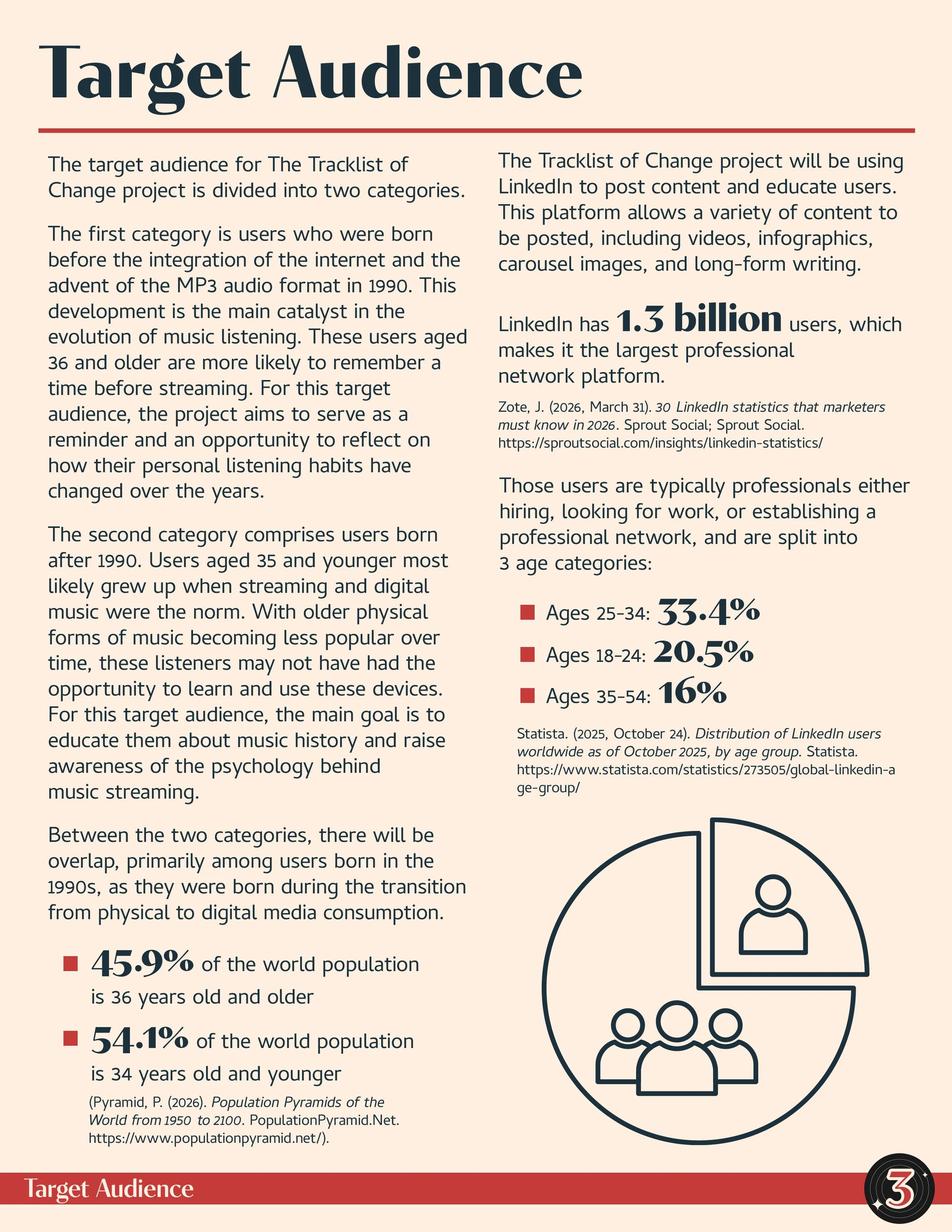

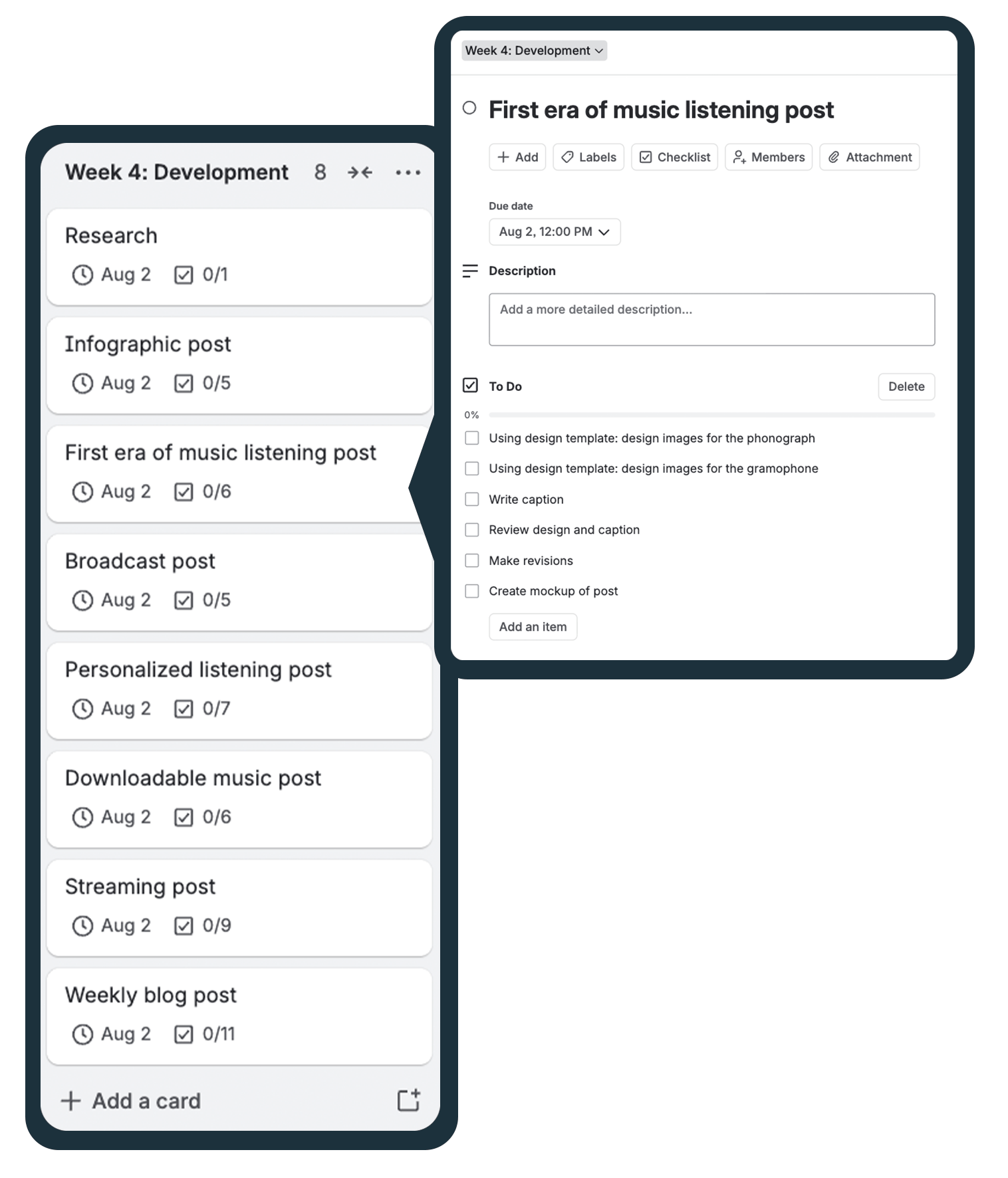
Once I developed my idea, I focused on creating a detailed project plan for the next few weeks. For this step, I used the project management software Trello. On the board dedicated to this project, I made each development phase its own task list. Within those lists, I created action cards for even the smallest tasks that would need to be completed that week to stay on track. Within those action cards, I created a customized to-do list of steps for each task, along with a due date.

At this point in the production process, I have done a lot of research and planning, and now it is time to create outlines to visualize the content I have been creating in my head. What was once an idea is now becoming something real that others can view, critique, and learn from. In this phase, I created three outlines: the infographic, era carousel posts 1-4, and the streaming era carousel post.
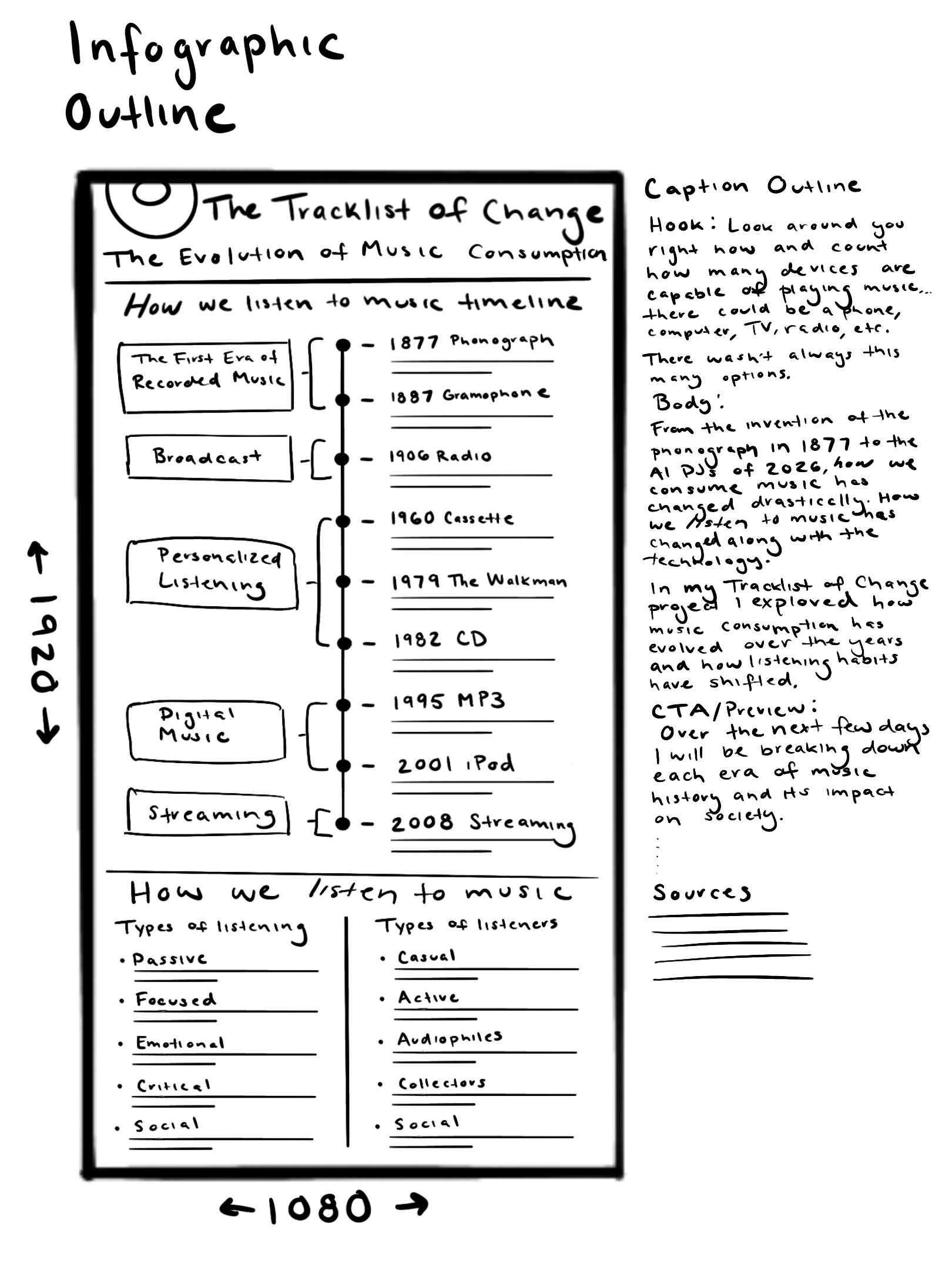
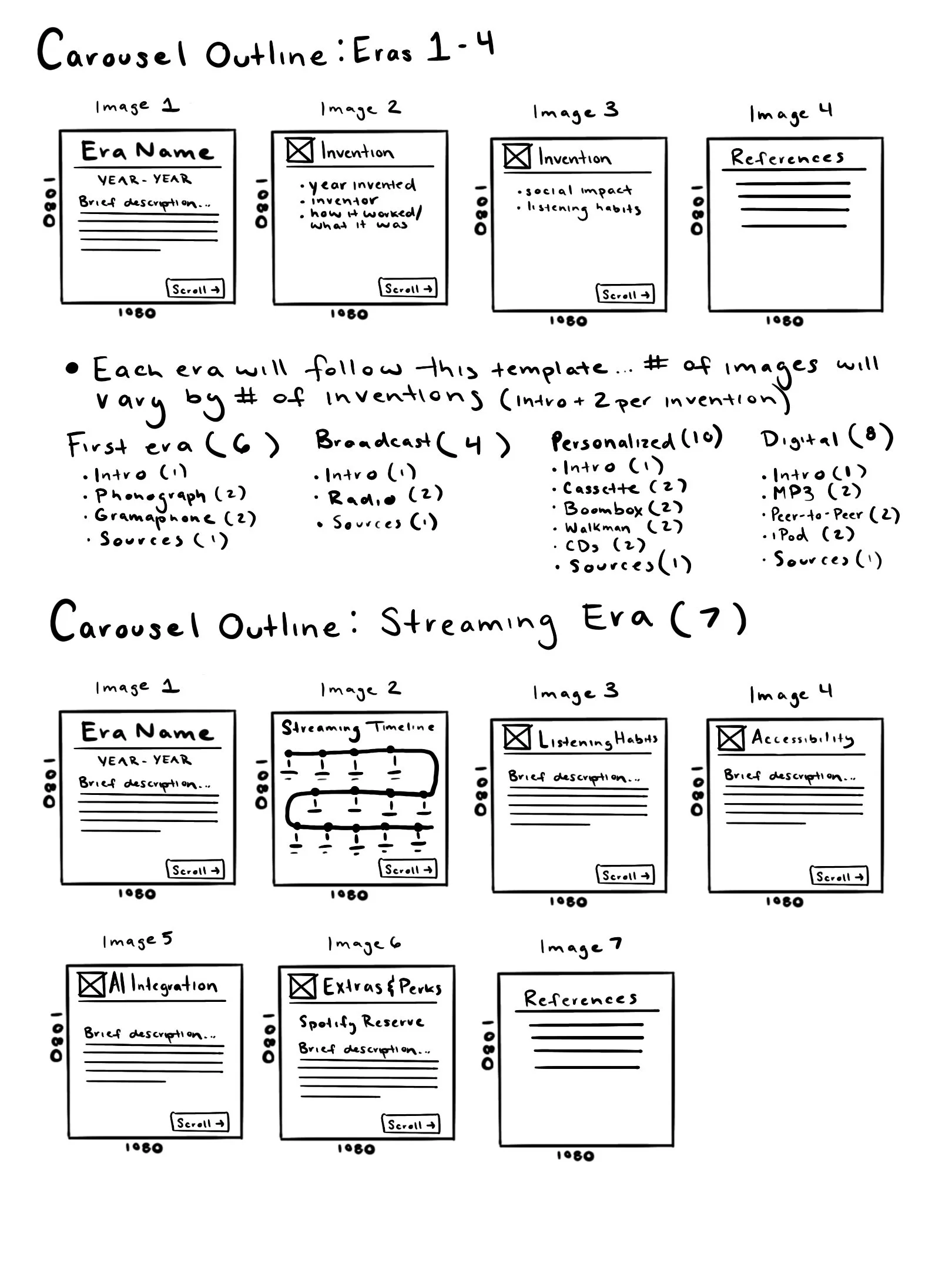

The next step in my process was to take my outlines and develop the content in Photoshop for each post. Once I started using the visual assets, my designs deviated slightly from my rough drafts. The biggest changes were the order of the content and the number of images in each era's carousel. I wanted to add an analysis page at the end of each post to summarize what the carousel covered briefly.
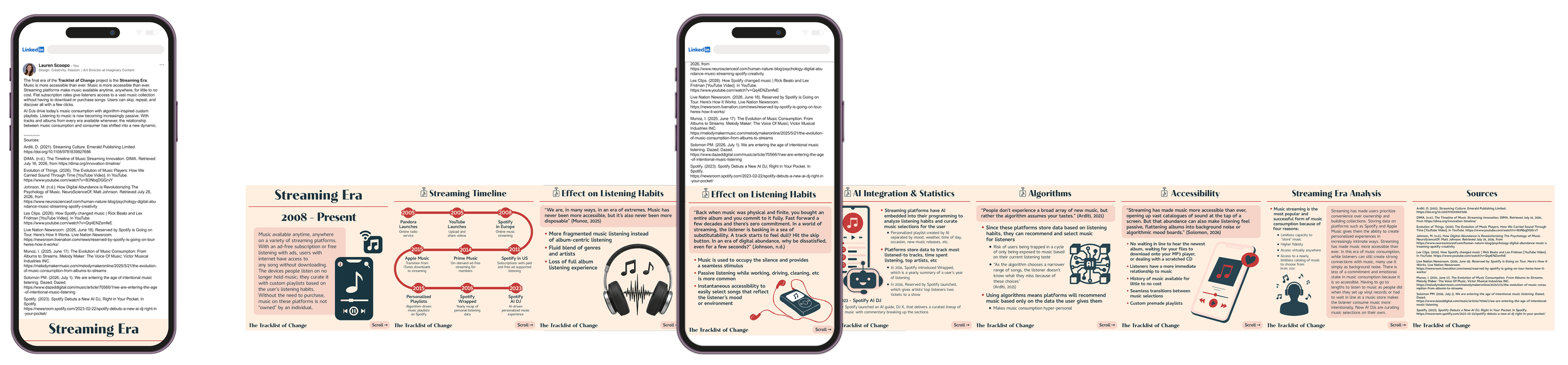

Once I developed the creative and wrote the content, I conducted user testing with three users of varying ages and occupations. This step is essential to uncover any usability and clarity issues. For the testing method, I chose an unmoderated approach in which users review the content and complete a survey afterward on their own.
The deck I created for review included an introduction to the project and a separate section for each post. Each post included the caption and the images.
After reviewing the deck, the users filled out a survey evaluating their experience. The first section was individual user questions such as occupation, age, social media usage, current standing, and experience with music and music technology.
The second section focused on the individual pieces of content with a mix of open-ended, rating, and yes/no questions. All questions focused on the clarity of the content, graphics, and overall effectiveness of the project.
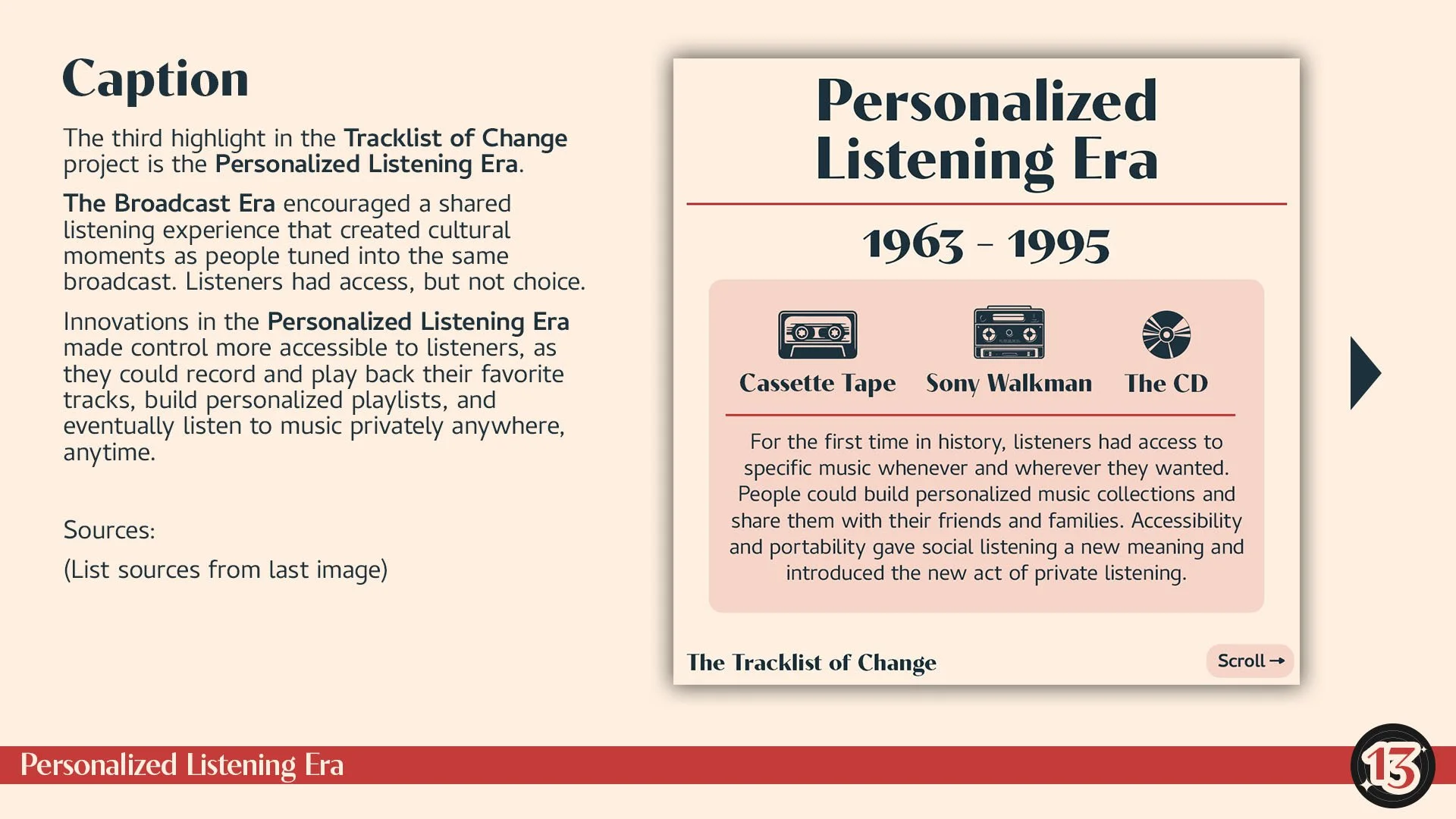

The feedback from user testing was positive, with no issues that needed to be resolved before the release phase. For revisions, I rewrote all the captions I had previously written for each post. LinkedIn displays only the first 200-300 characters, depending on the device, so the caption hook is essential to a post's success. By creating an engaging opening sentence, you're more likely to stop scrolling and consume the content.

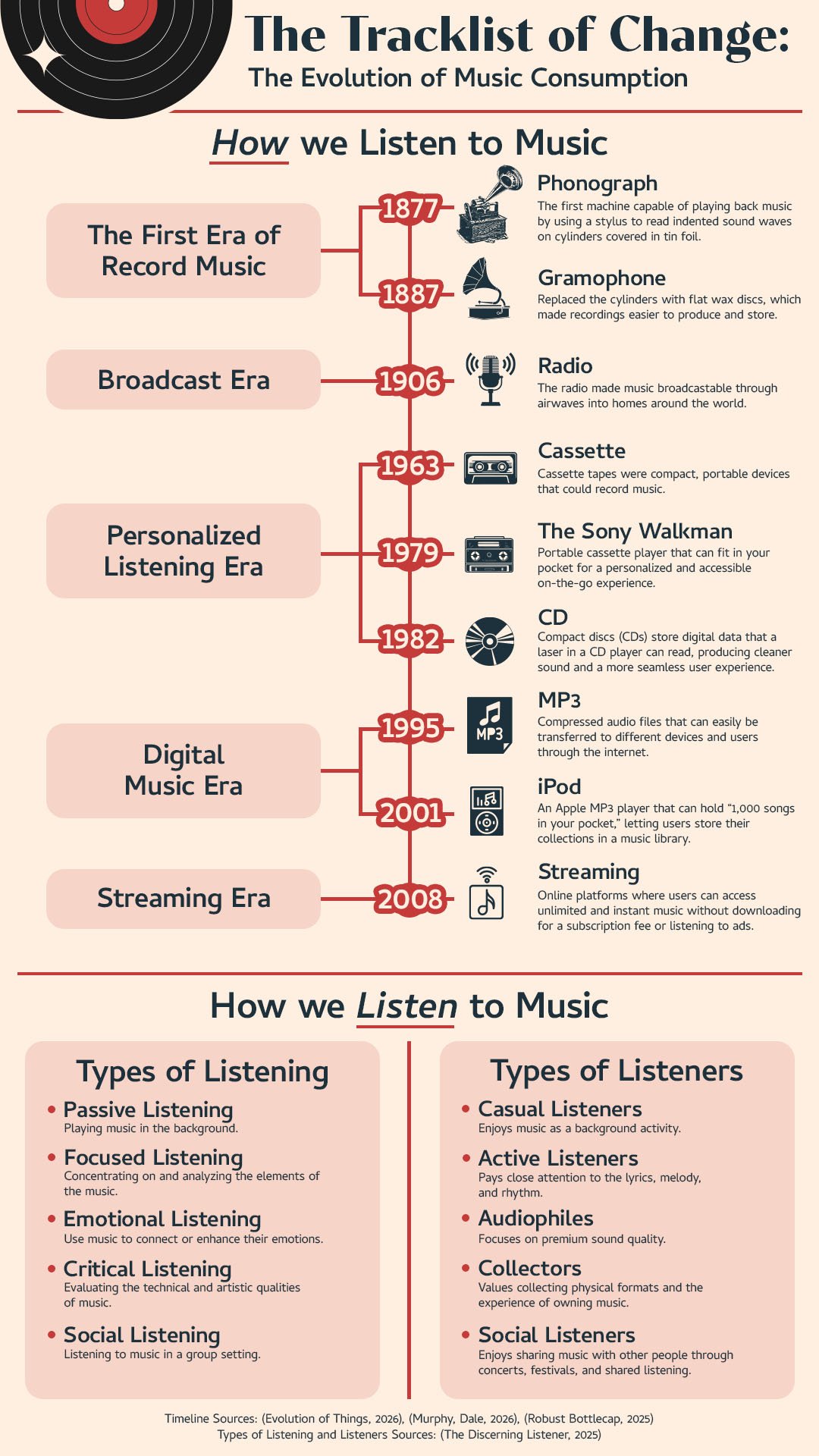
the evolution of music consumption infographic post
CAPTION:
Look around you right now and count how many devices can play music… There could be a phone, a computer, a TV, a radio, etc. There weren't always this many options.
From the invention of the phonograph in 1877 to the AI DJs of 2026, how we consume music has changed drastically. How we listen to music has changed along with technology.
In my Tracklist of Change project, I explored how music consumption has evolved over the years and how listening habits have shifted.
Over the next few days, I will be breaking down each era of music history and its impact on society.
#music #musicconsumption #musicevolution
Sources:
Evolution of Things. (2026). The Evolution of Music Players: How We Carried Sound Through Time [YouTube Video]. In YouTube. https://www.youtube.com/watch?v=B3NbqDGGrvY
Murphy, K., & Dale, M. (2026, July 5). The art and science of music consumption: A timeline of tech advancements in music. Far Out Magazine; Far Out Magazine. https://faroutmagazine.co.uk/a-timeline-of-tech-advancements-in-music/
Robust Bottlecap. (2025, February 7). The Evolution of Music Consumption. Medium; Medium. https://medium.com/@alkpersonaluse/the-evolution-of-music-consumption-how-weve-listened-through-the-ages-853c6df37f6c
The Discerning Listener. (2025, September 22). Understanding Different Music Listeners. The Discerning Listener; The Discerning Listener. https://www.thediscerninglistener.com.au/post/exploring-different-categories-of-music-listeners
the first era of recorded music carousel image post
CAPTION:
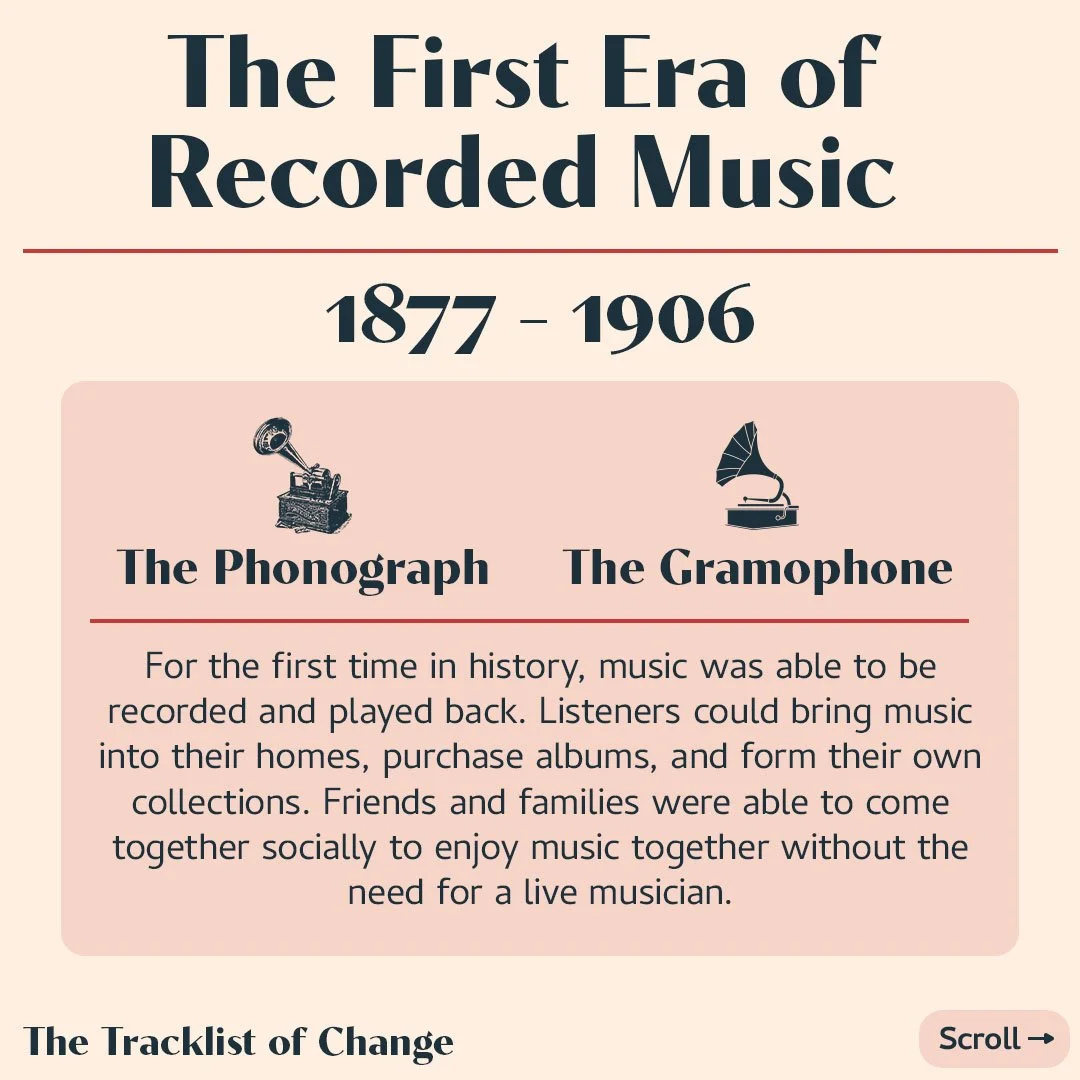
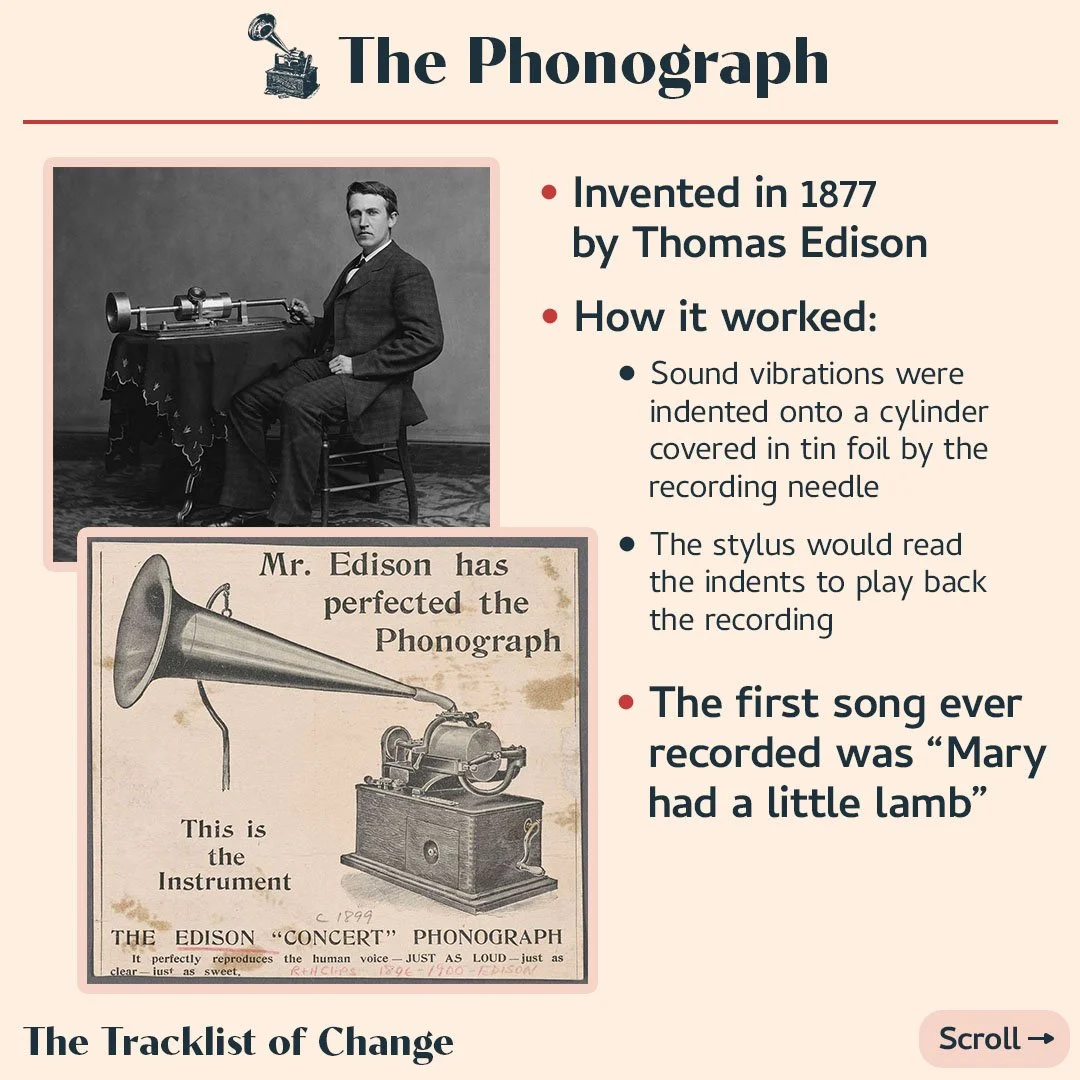
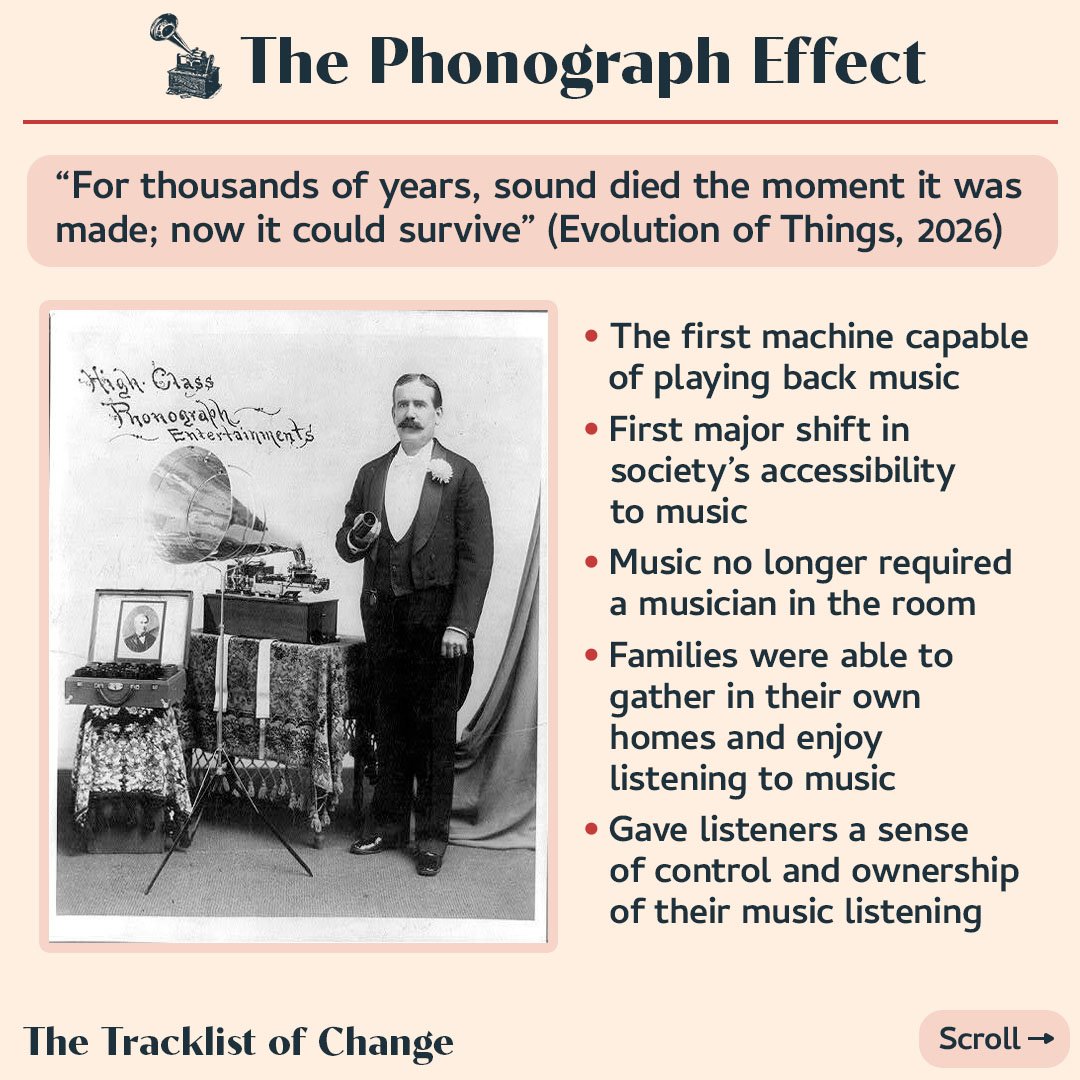
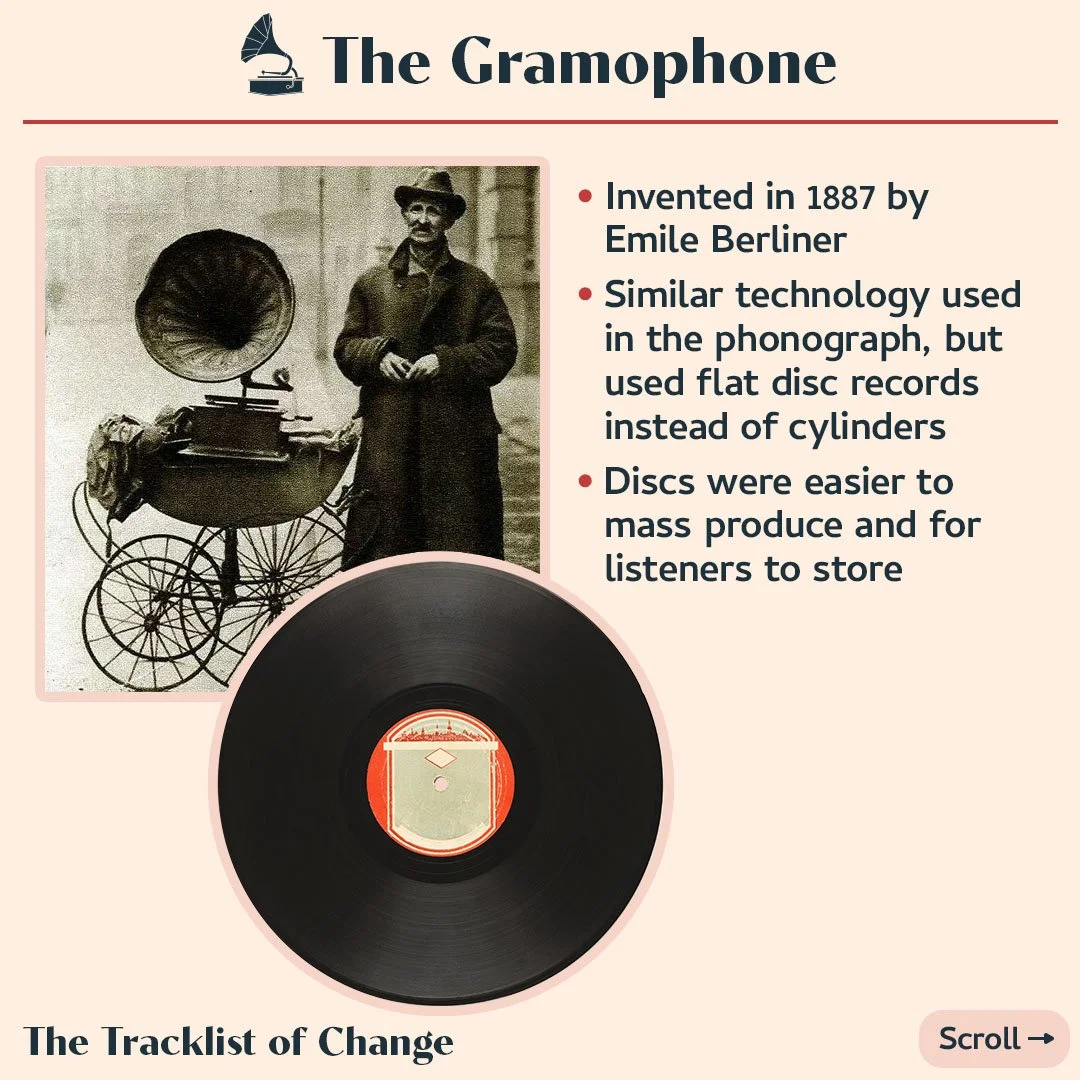
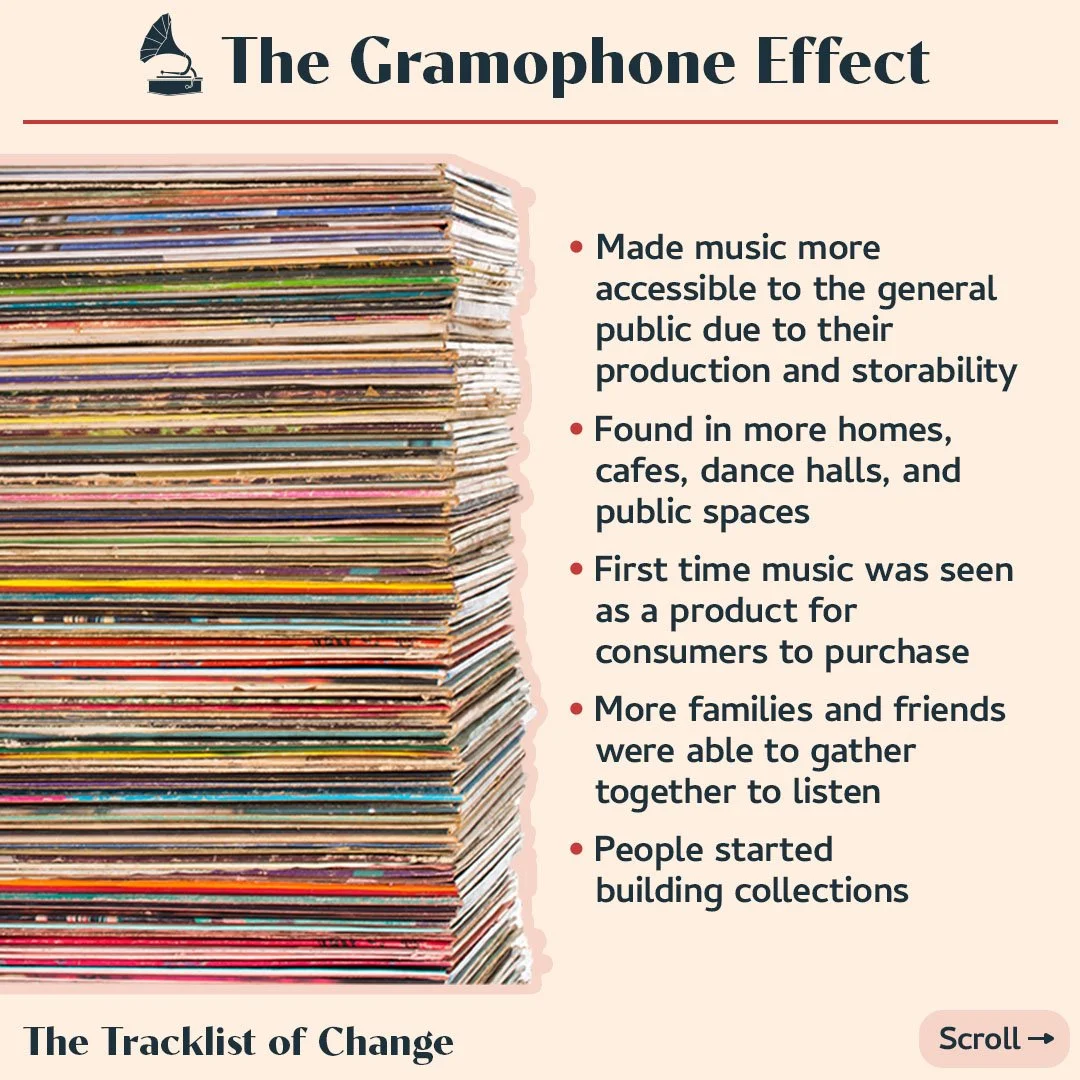
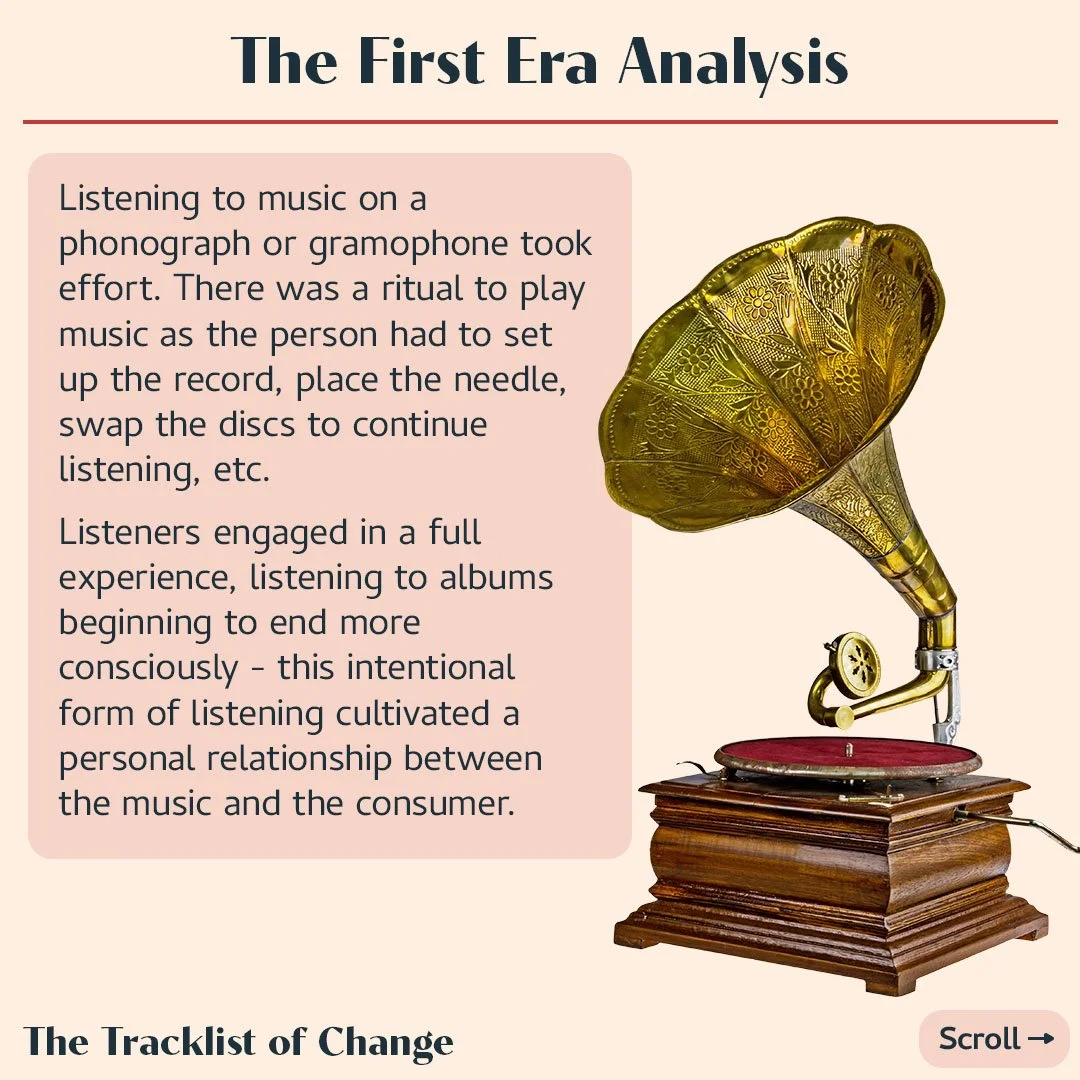
Before 1877, sound died the moment it was made. There was no way to replay music without a musician performing it again. That all changed in 1877, with the invention of the phonograph.
The first highlight in the Tracklist of Change project is the First Era of Recorded Music.
For the first time, listeners gained control over what they listened to, when they listened, and where they listened. The first era of recorded music caused a major shift that would change the world's listening habits forever.
#music #musicconsumption #musicevolution
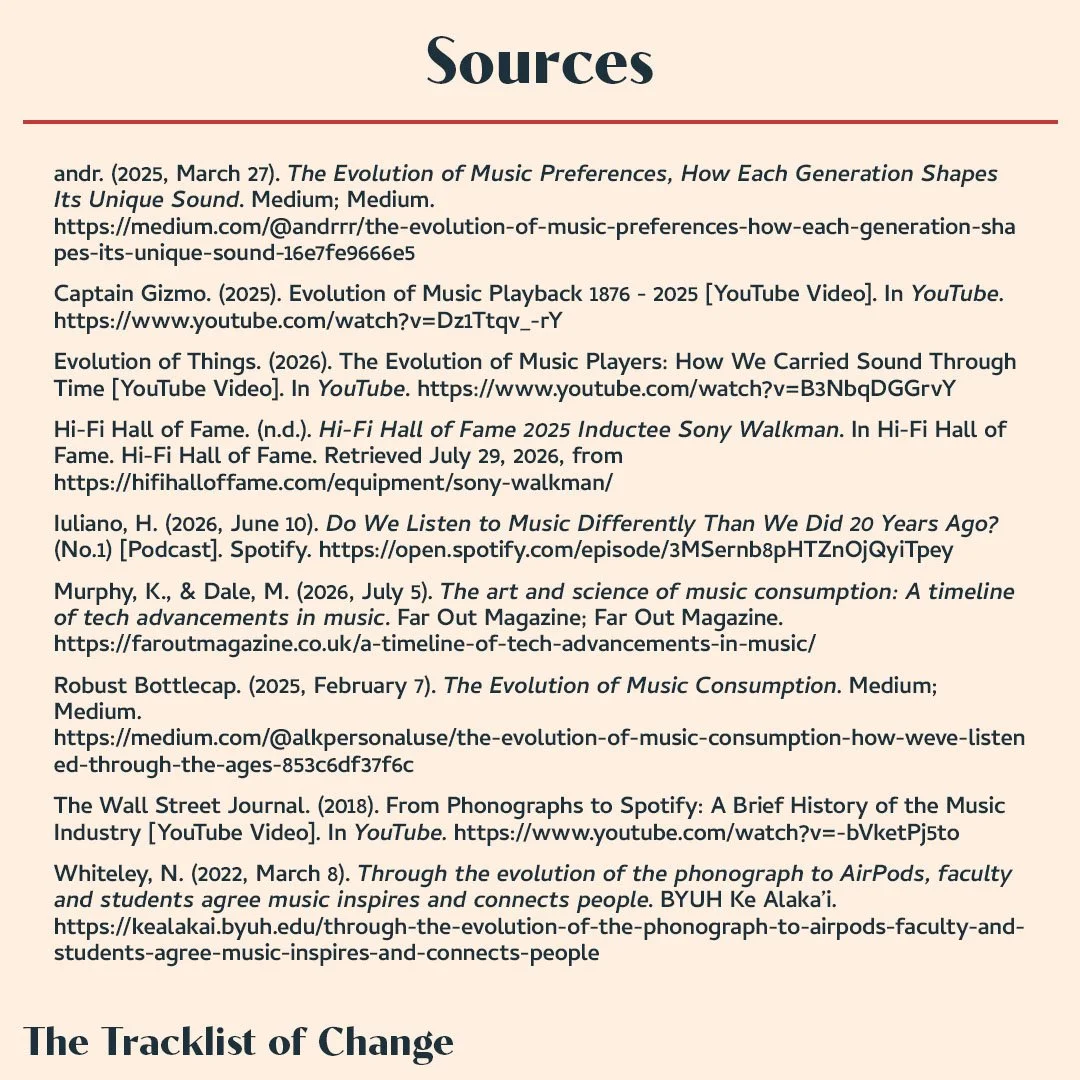
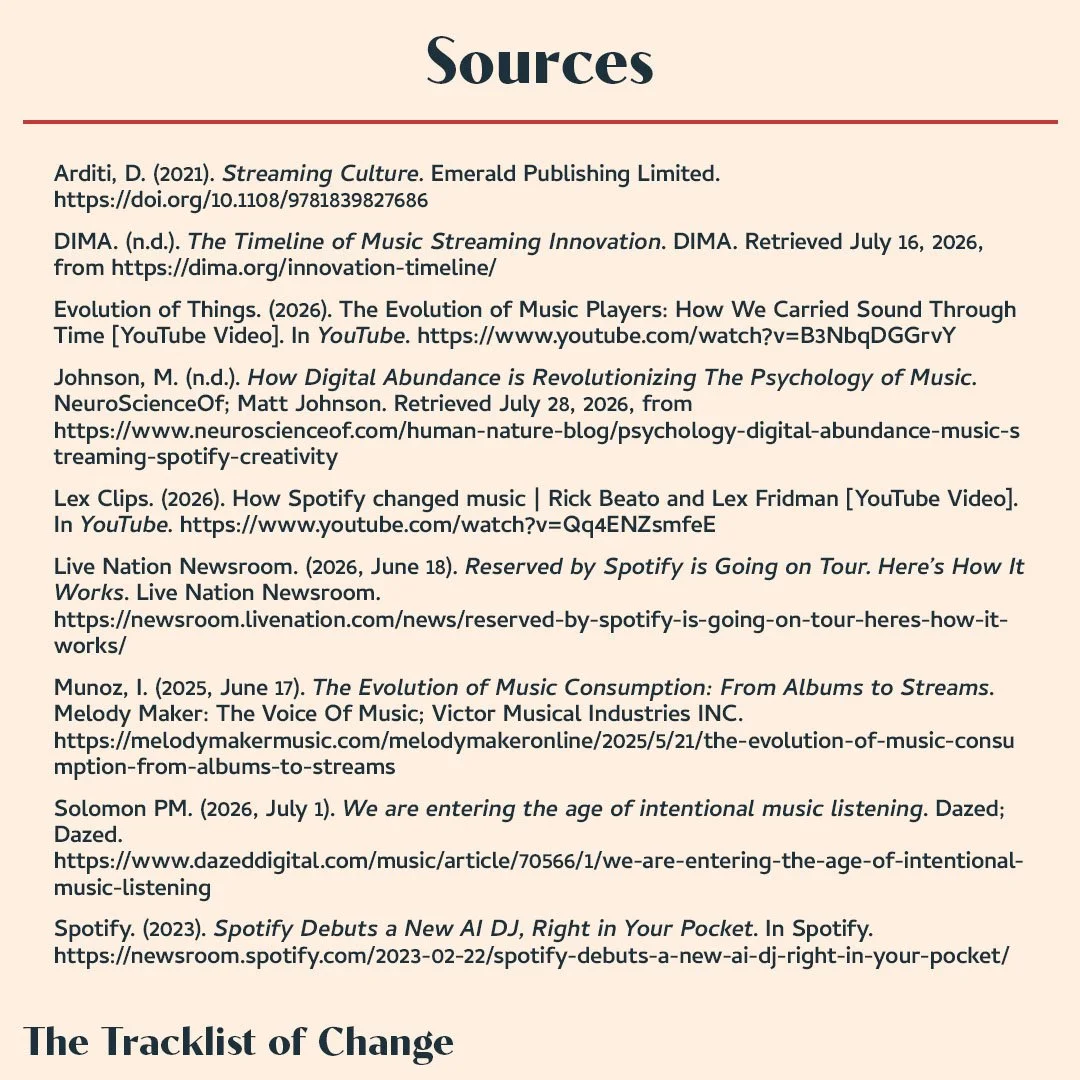
[Reference list from last slide]
broadcast era
carousel image post
CAPTION:
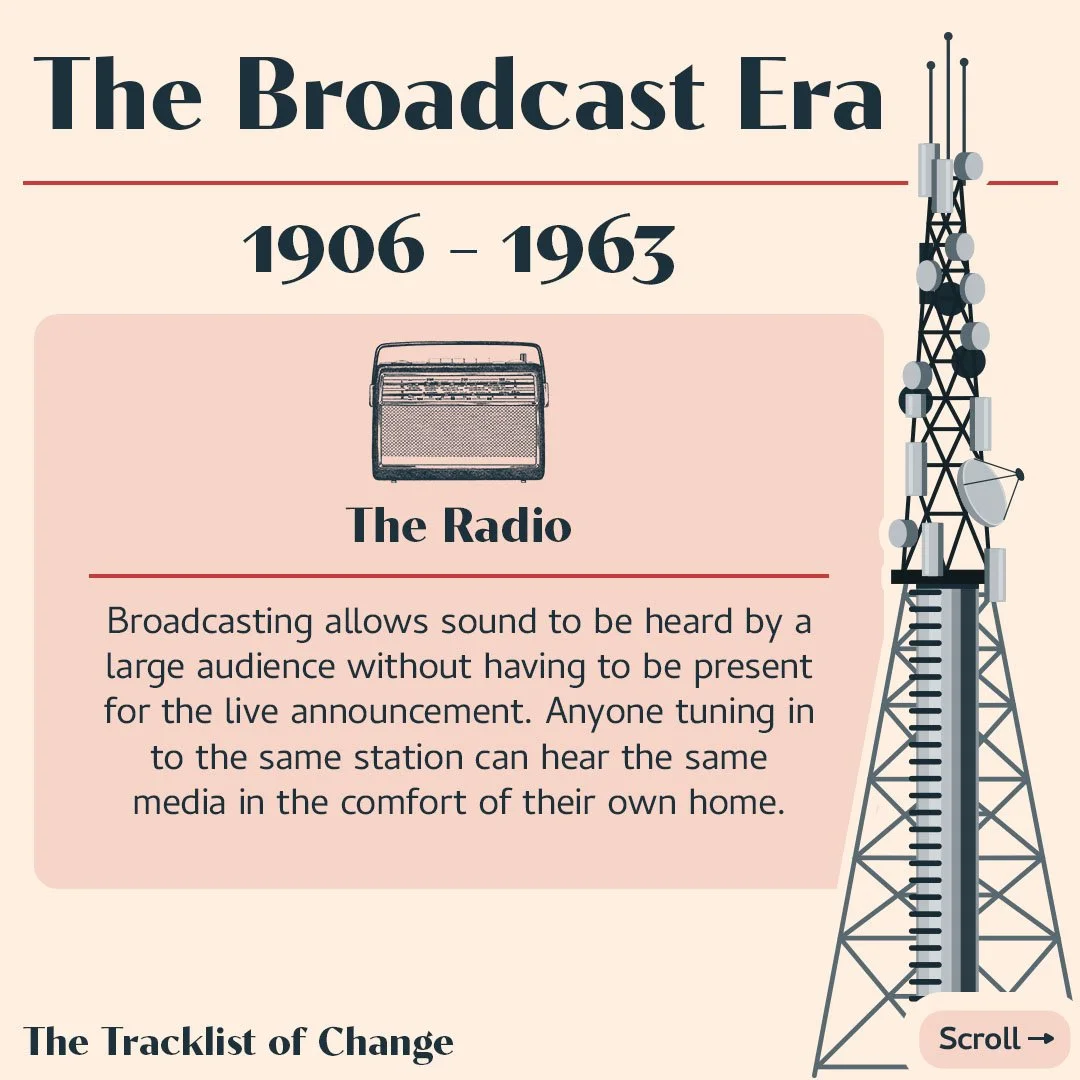
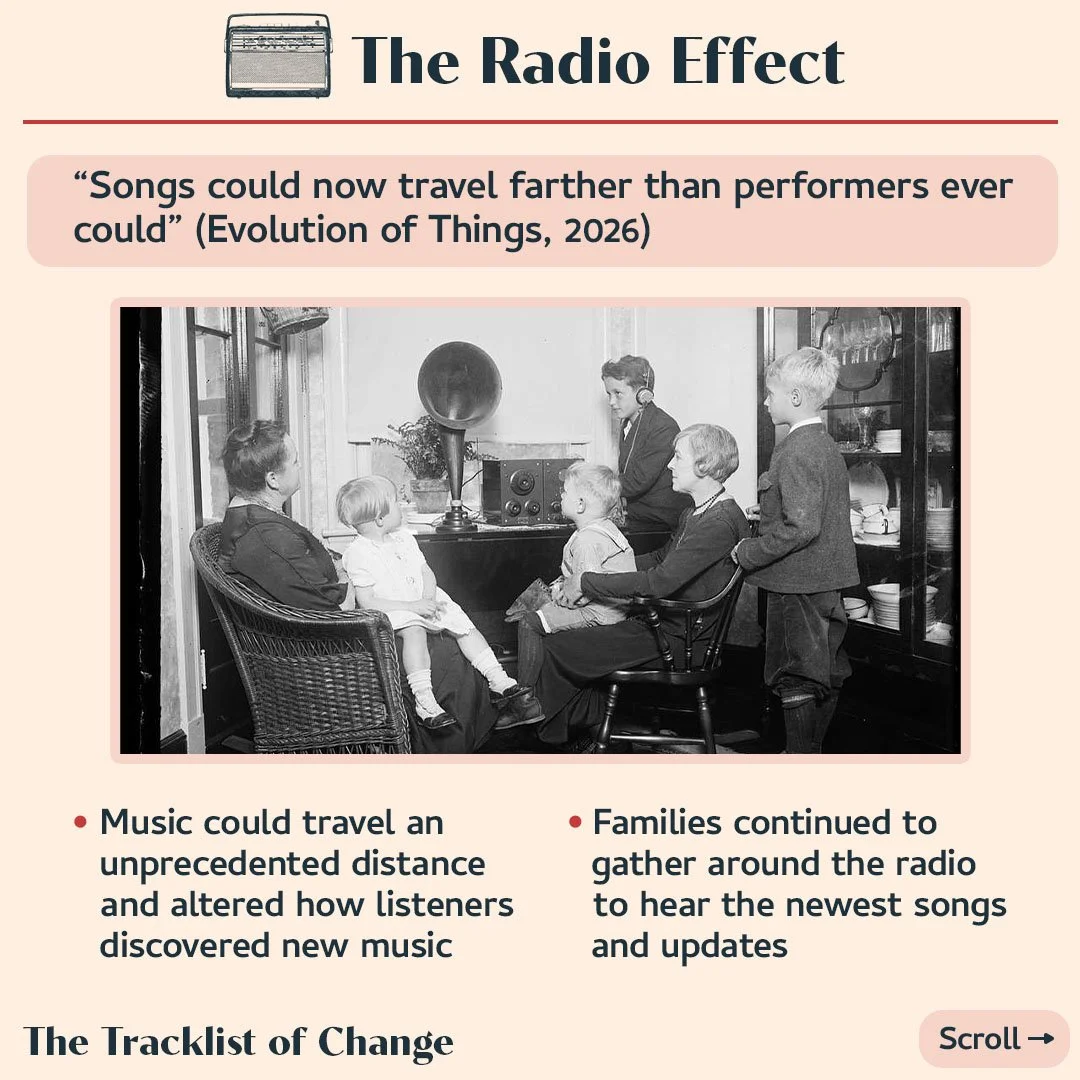
If you told someone in 1900 that they would soon be able to tune into a broadcast and engage in a shared experience from the comfort of their own home, they wouldn’t believe you.
The second highlight in the Tracklist of Change project is the Broadcast Era.
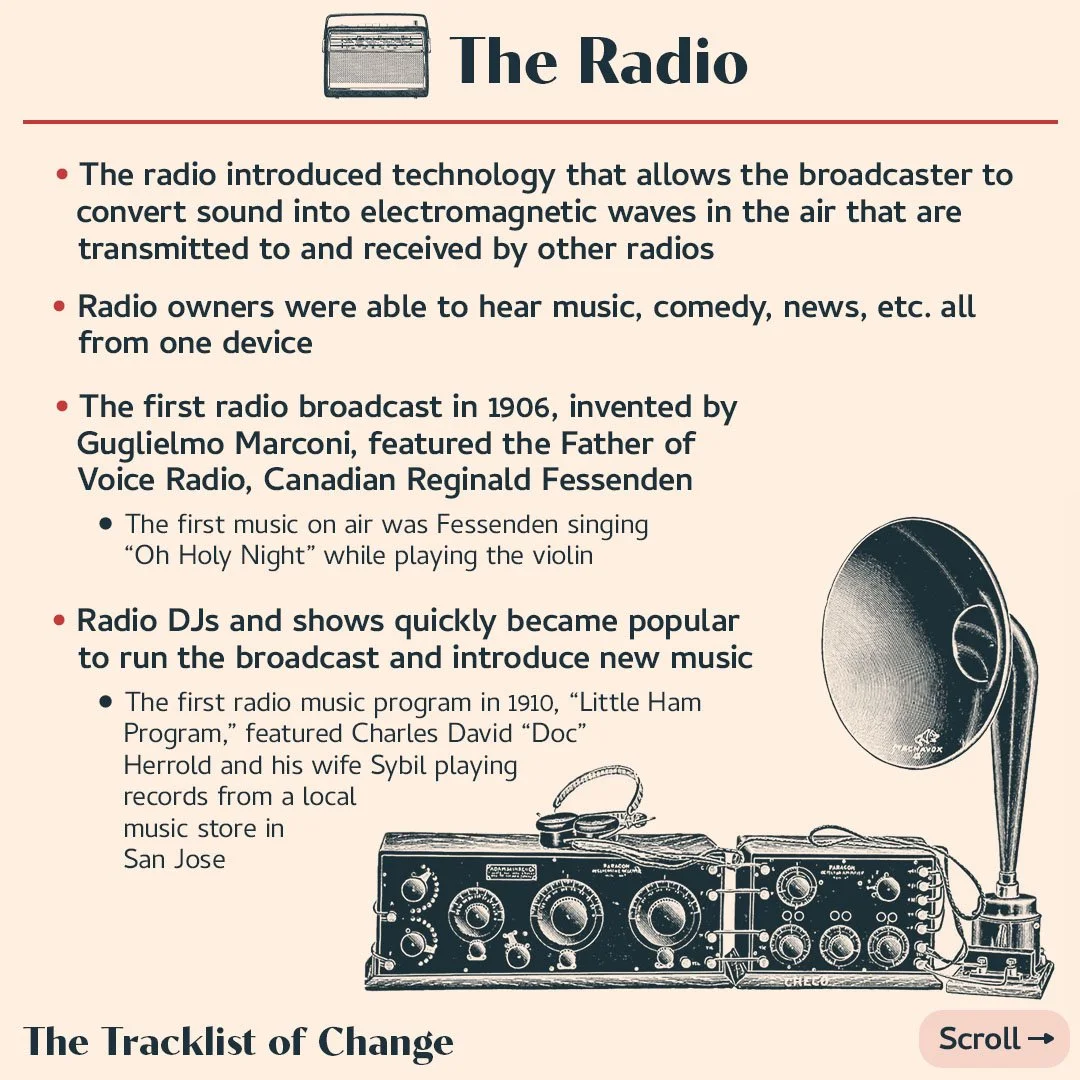
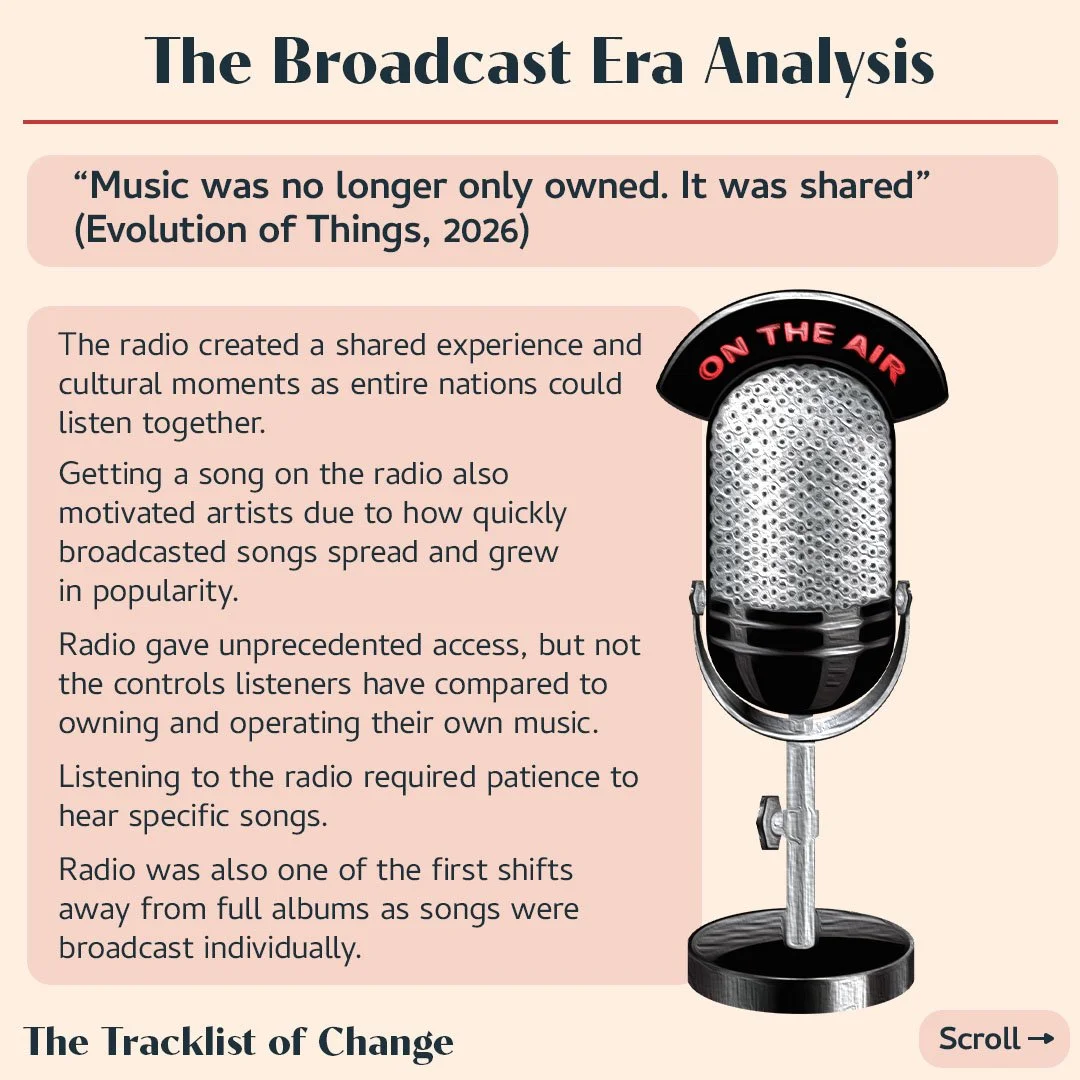
With the invention of the radio in 1906, families soon gathered around a machine that allowed them to hear music and news in real time. This era was an interesting combination of a shared and individual listening experience.
Unlike the First Era of Recorded Music with the phonograph and the gramophone, the focus was not on controlled music ownership, but on a listening experience guided by radio DJs.
#music #musicconsumption #musicevolution
[Reference list from last slide]
personalized
listening era
carousel image post
CAPTION:
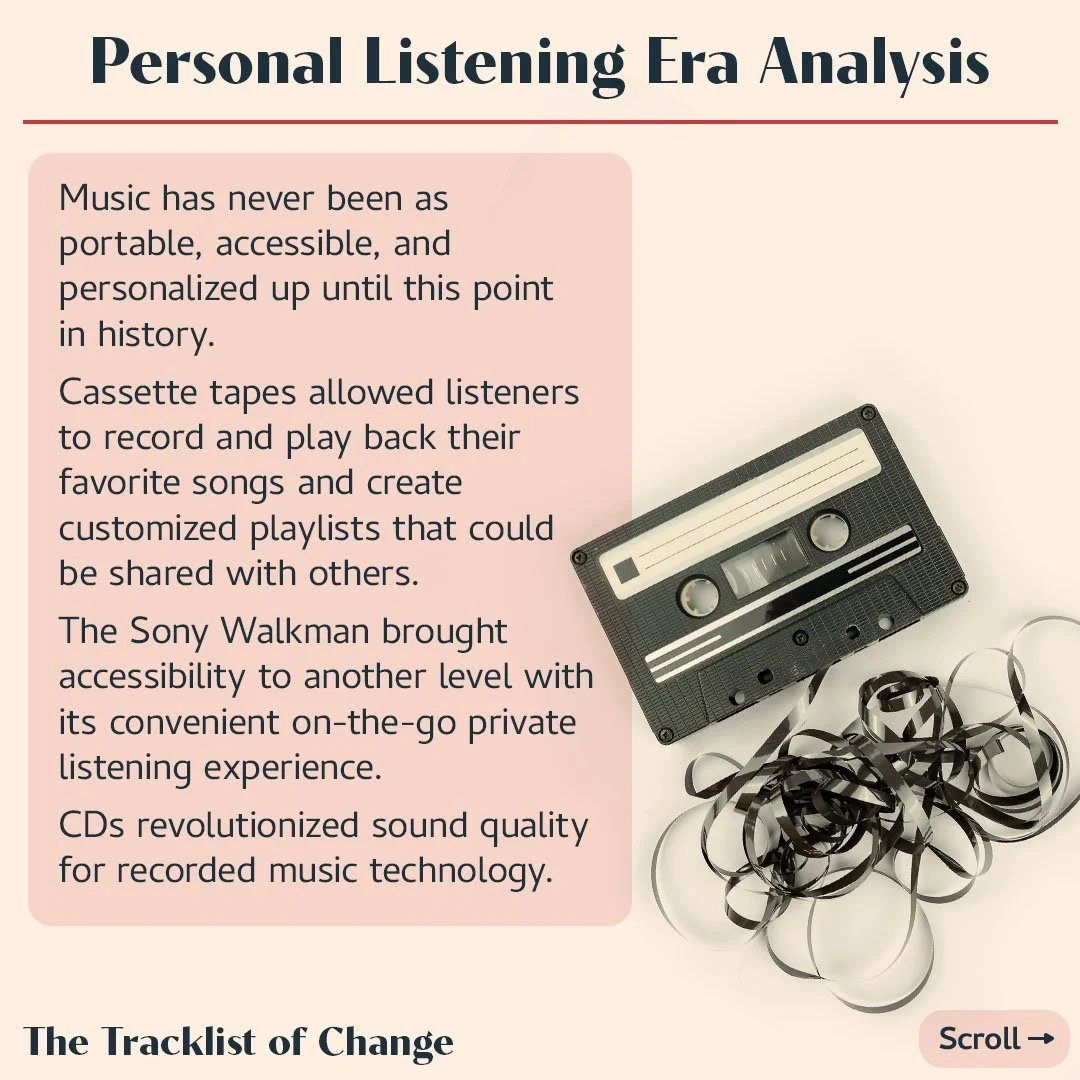
What the Broadcast Era lacked for listeners was choice.
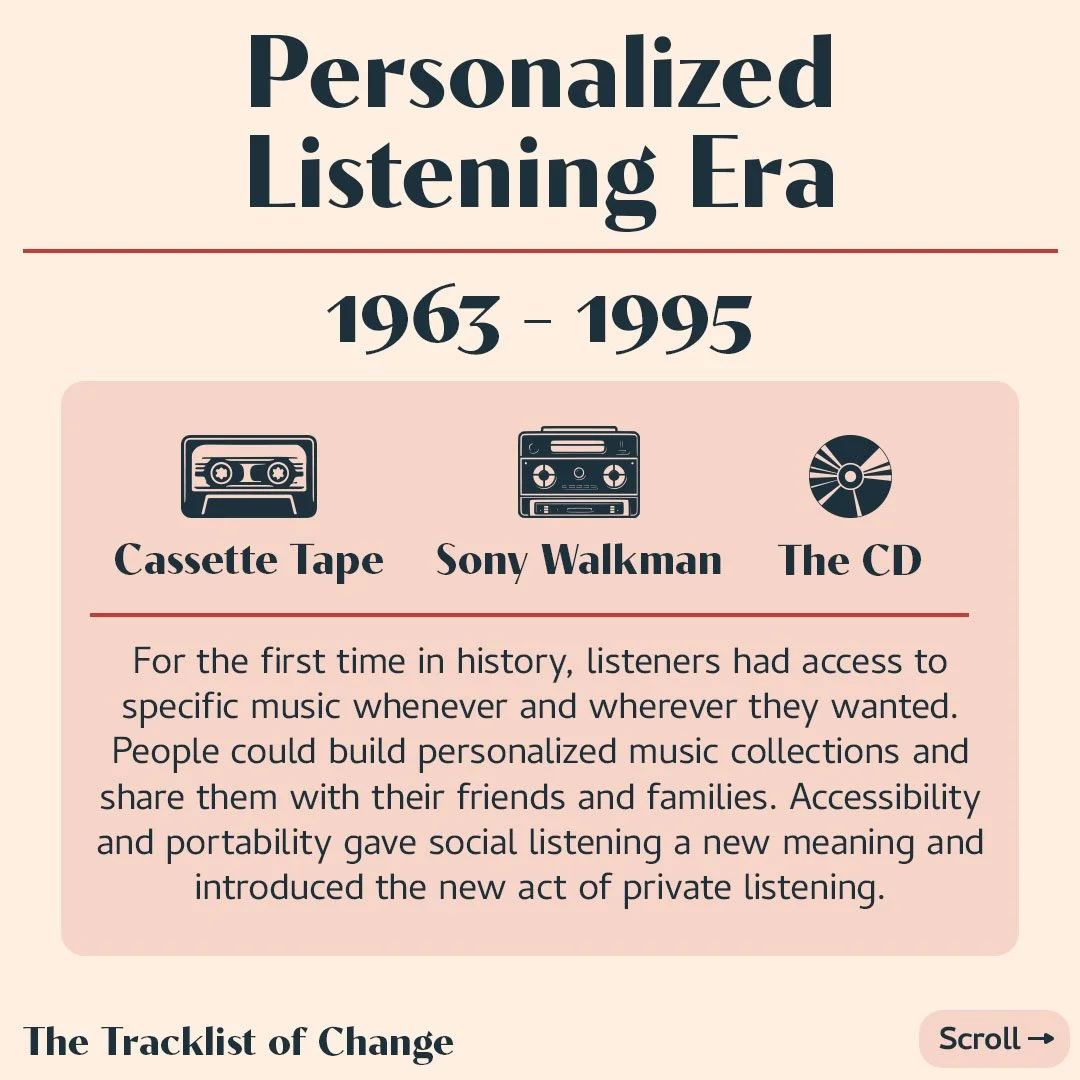
The third highlight in the Tracklist of Change project is the Personalized Listening Era.
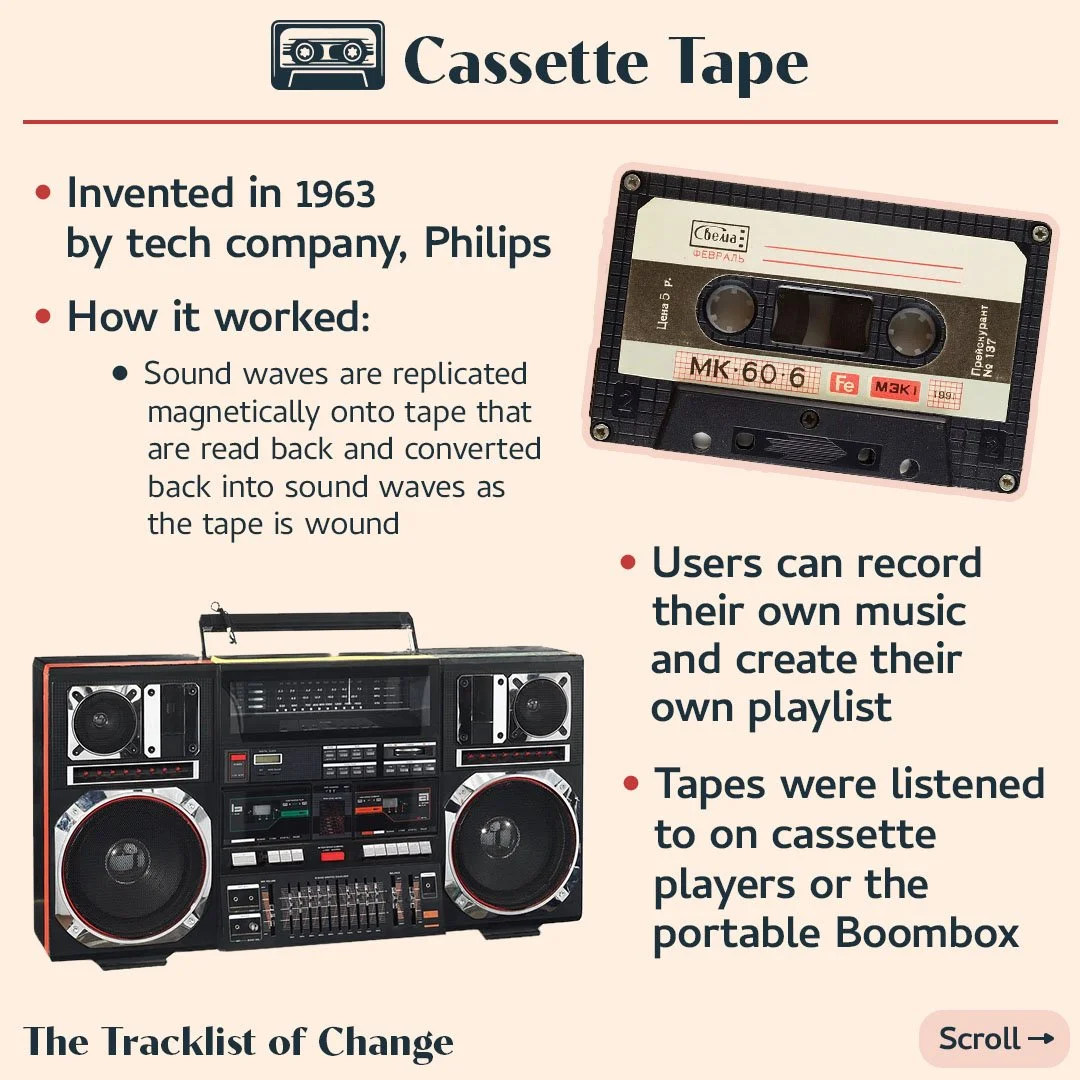
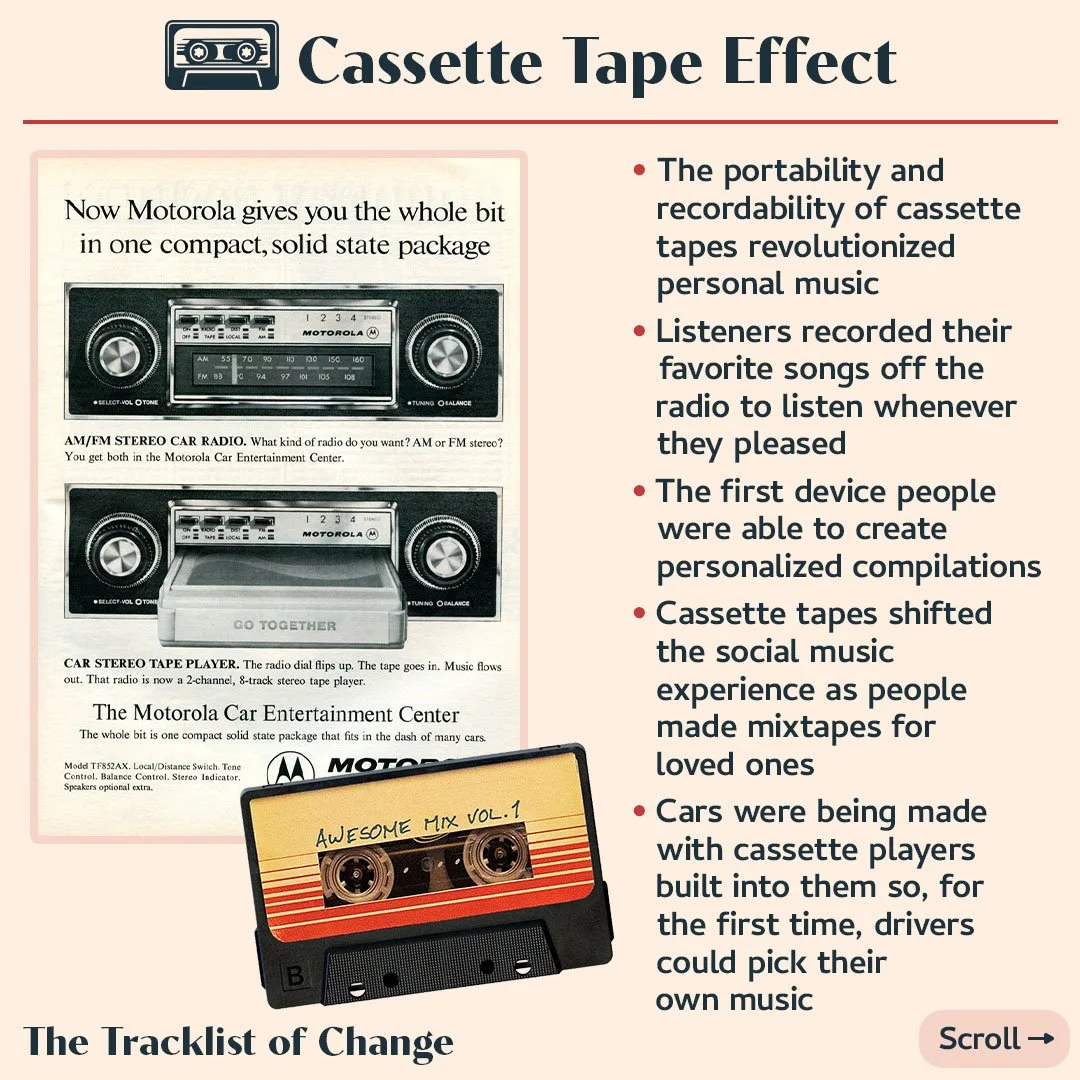
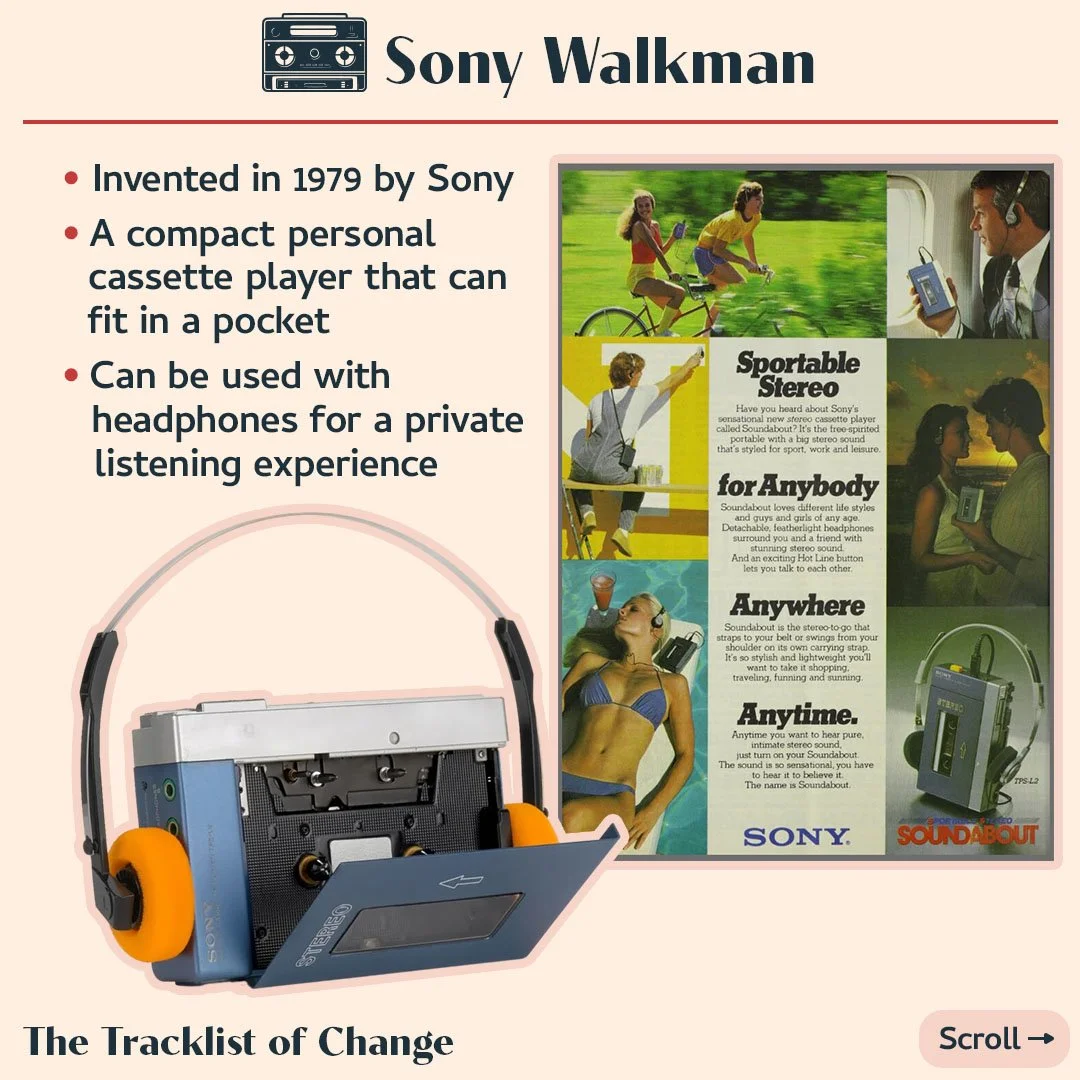
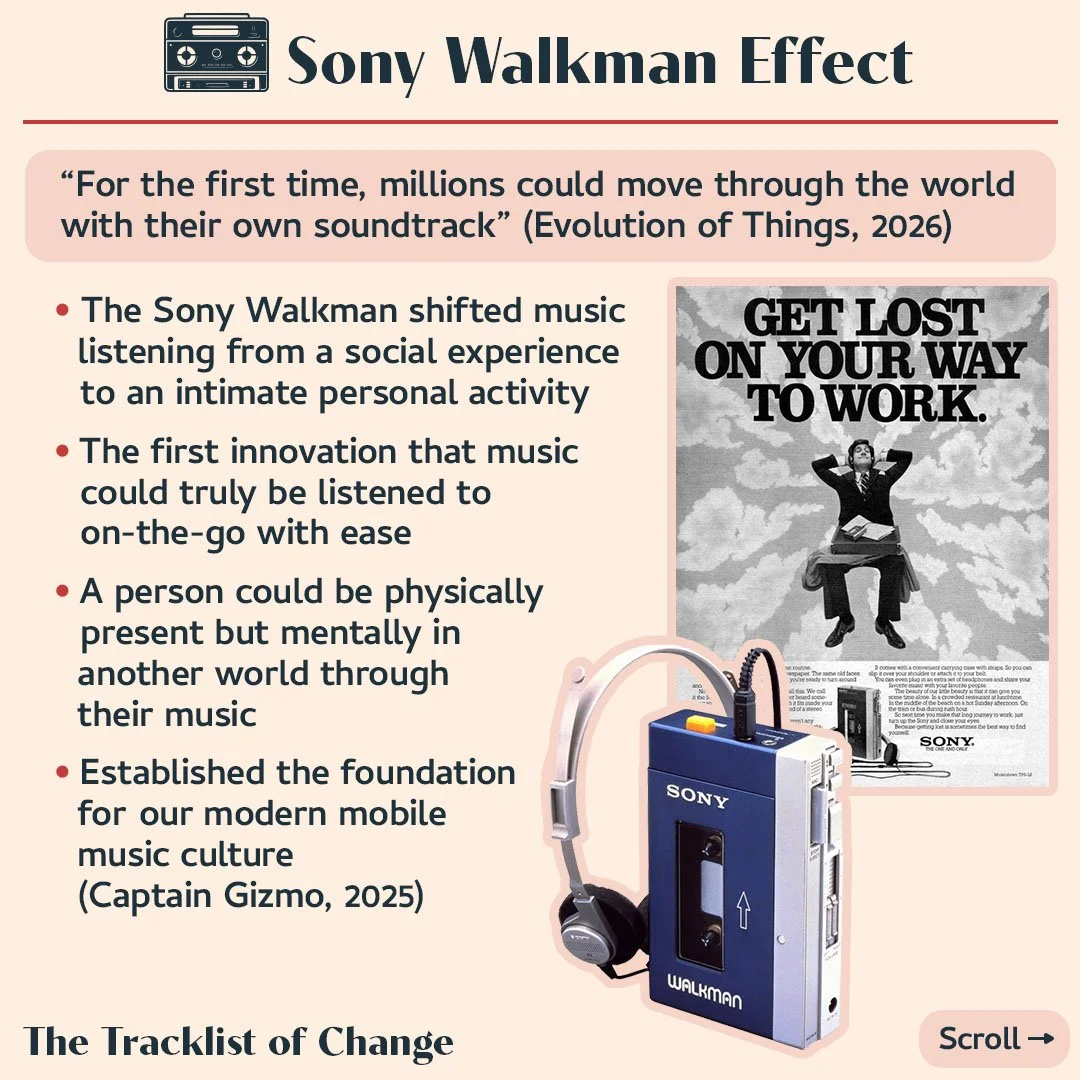
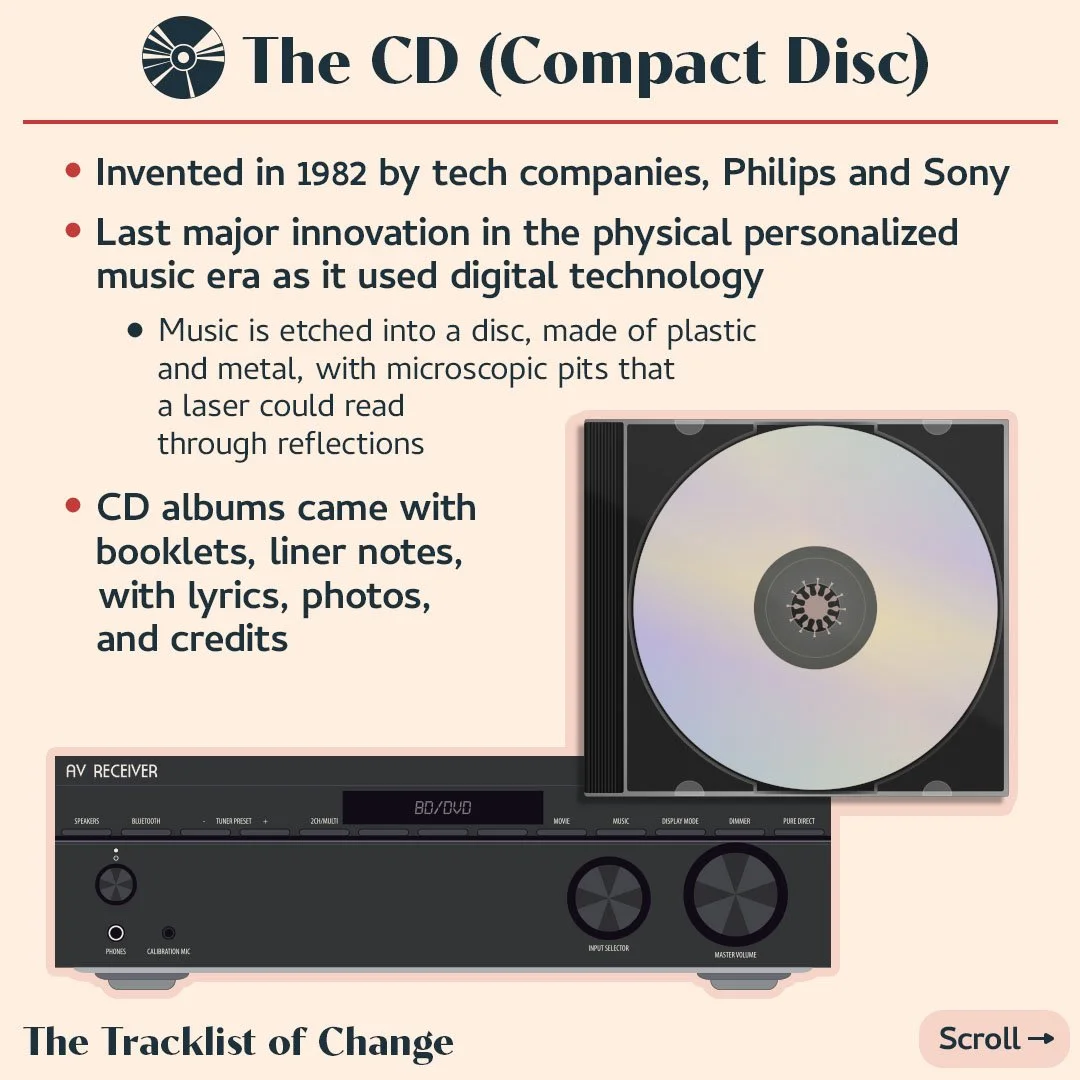
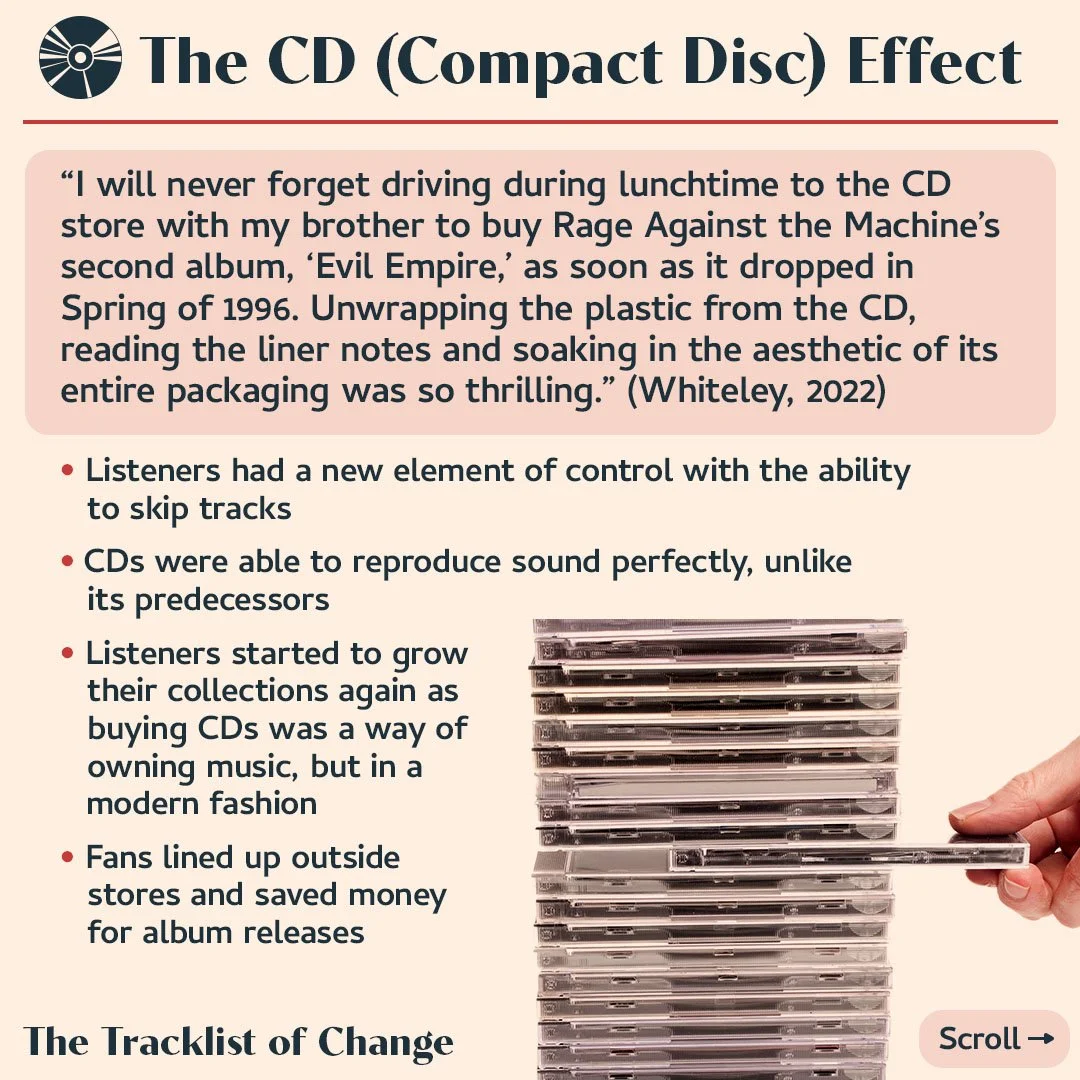
Innovations in the Personalized Listening Era made control more accessible to listeners, enabling them to record and play back their favorite tracks, build personalized playlists, and eventually listen to music privately, anywhere, anytime.
#music #musicconsumption #musicevolution
[Reference list from last slide]
digital music era carousel image post
CAPTION:
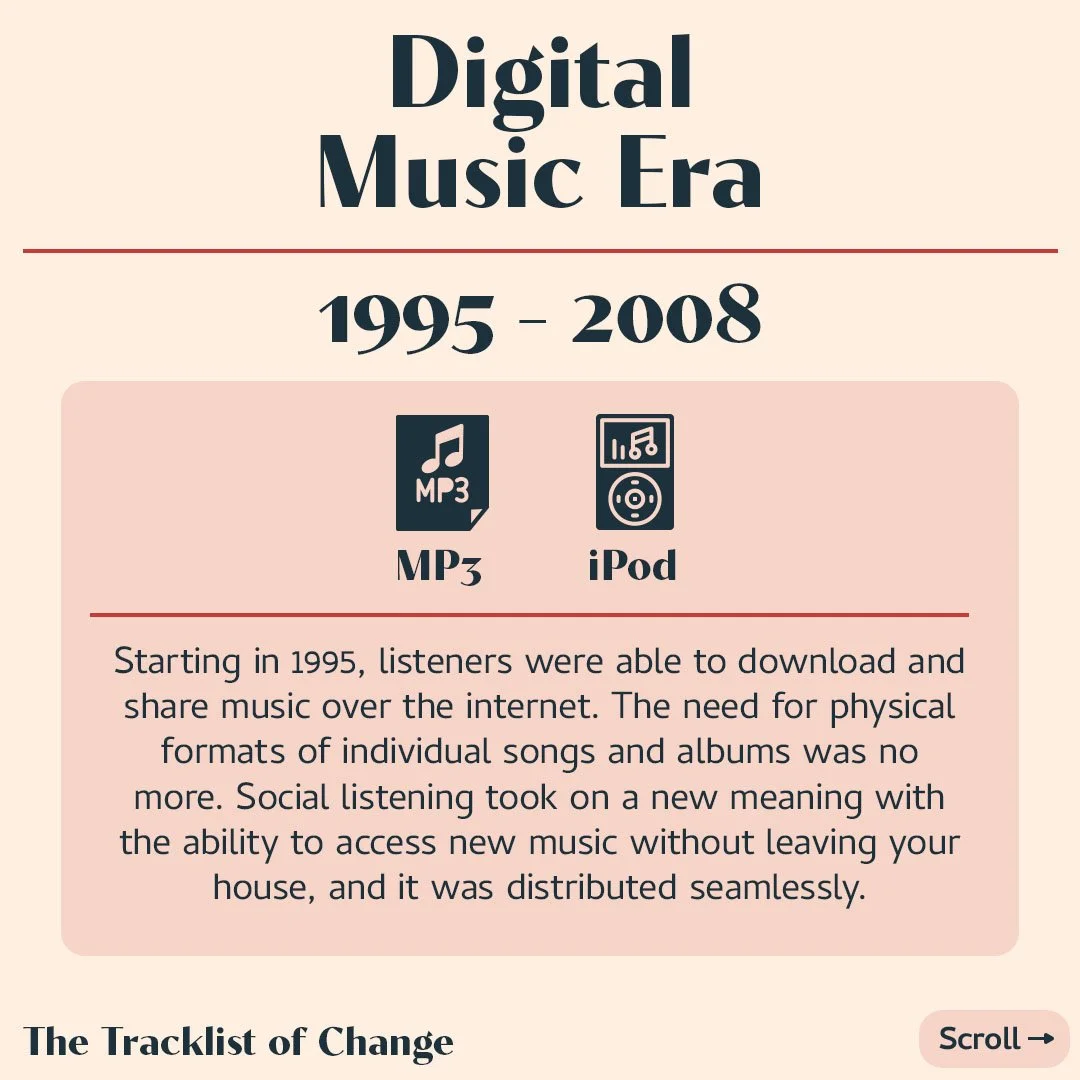
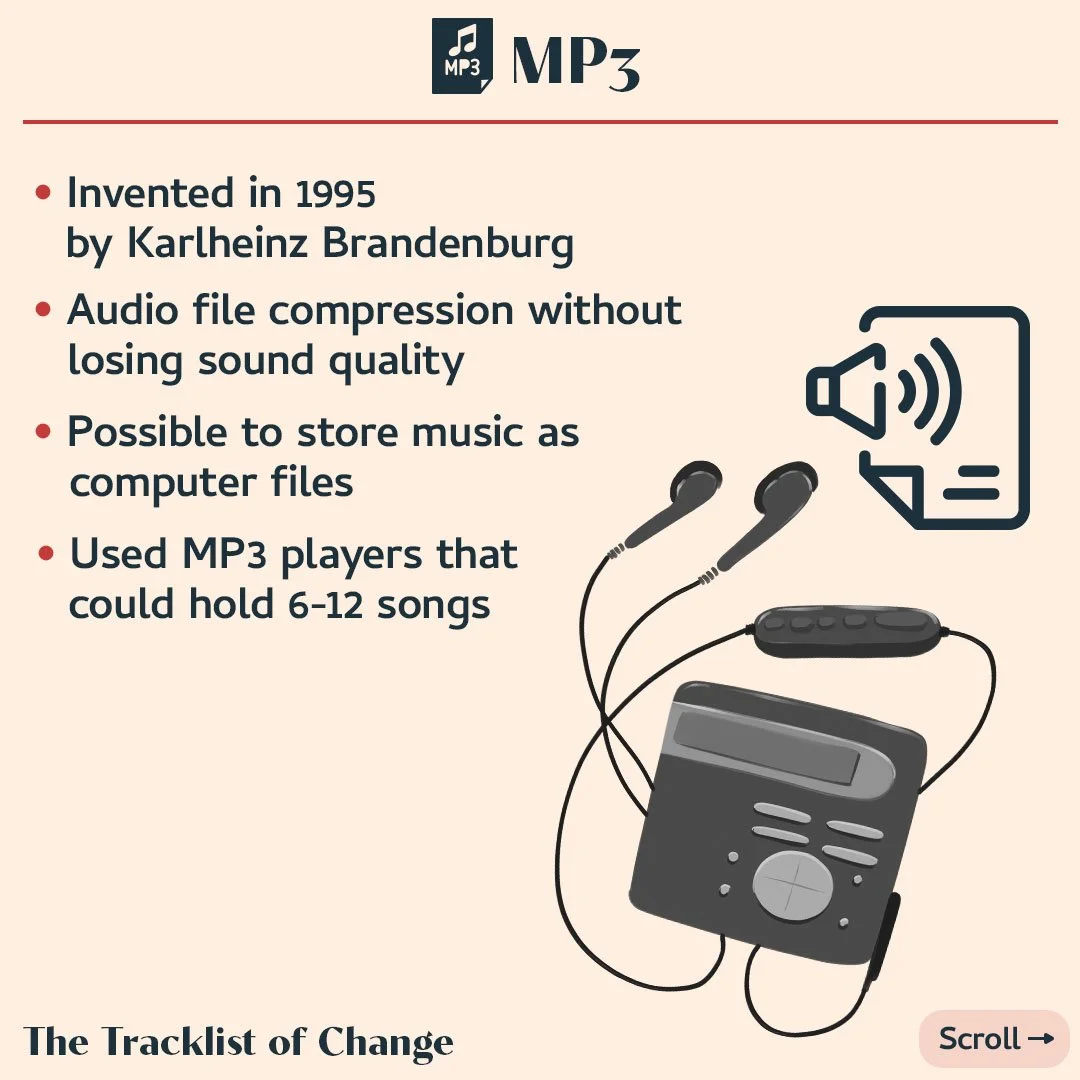
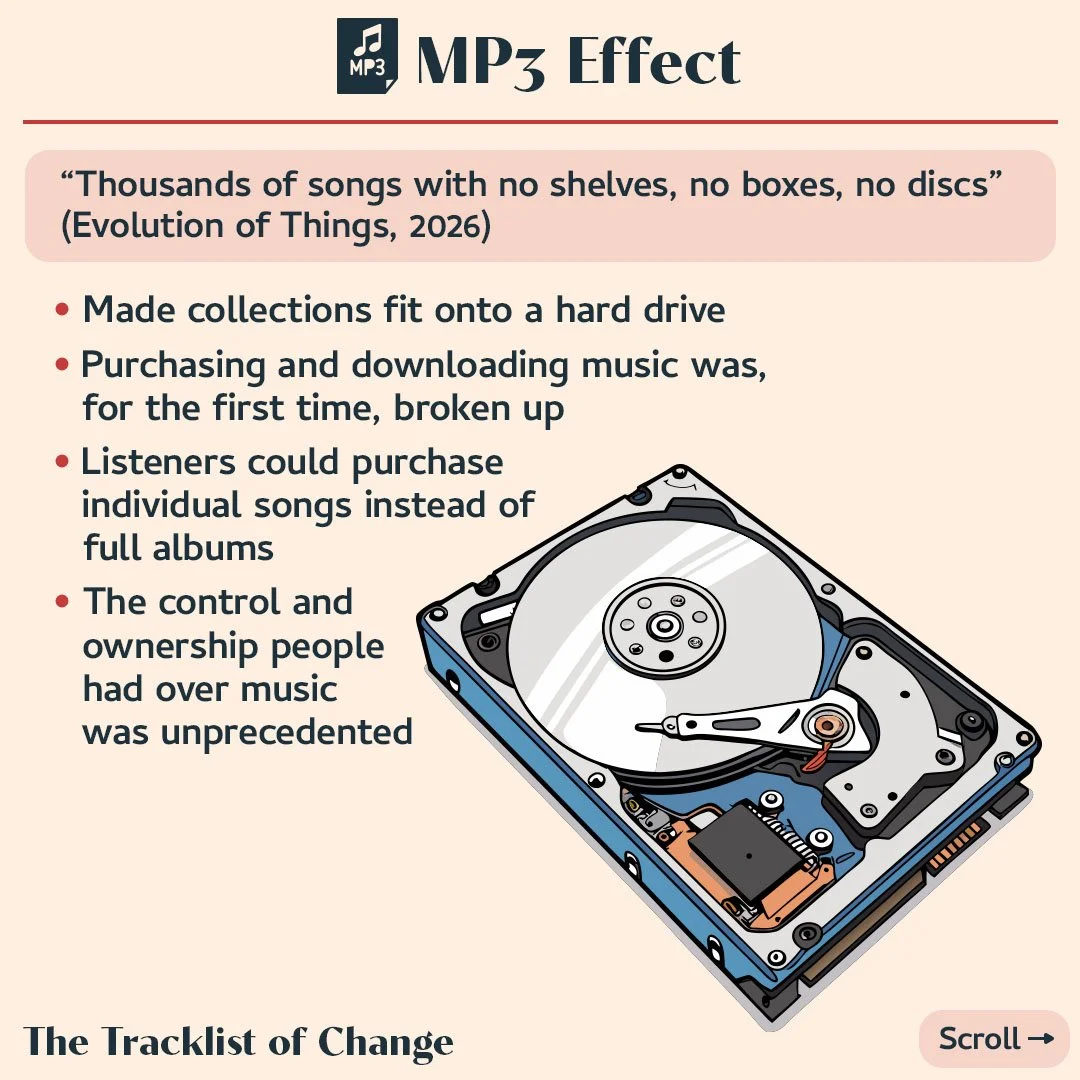
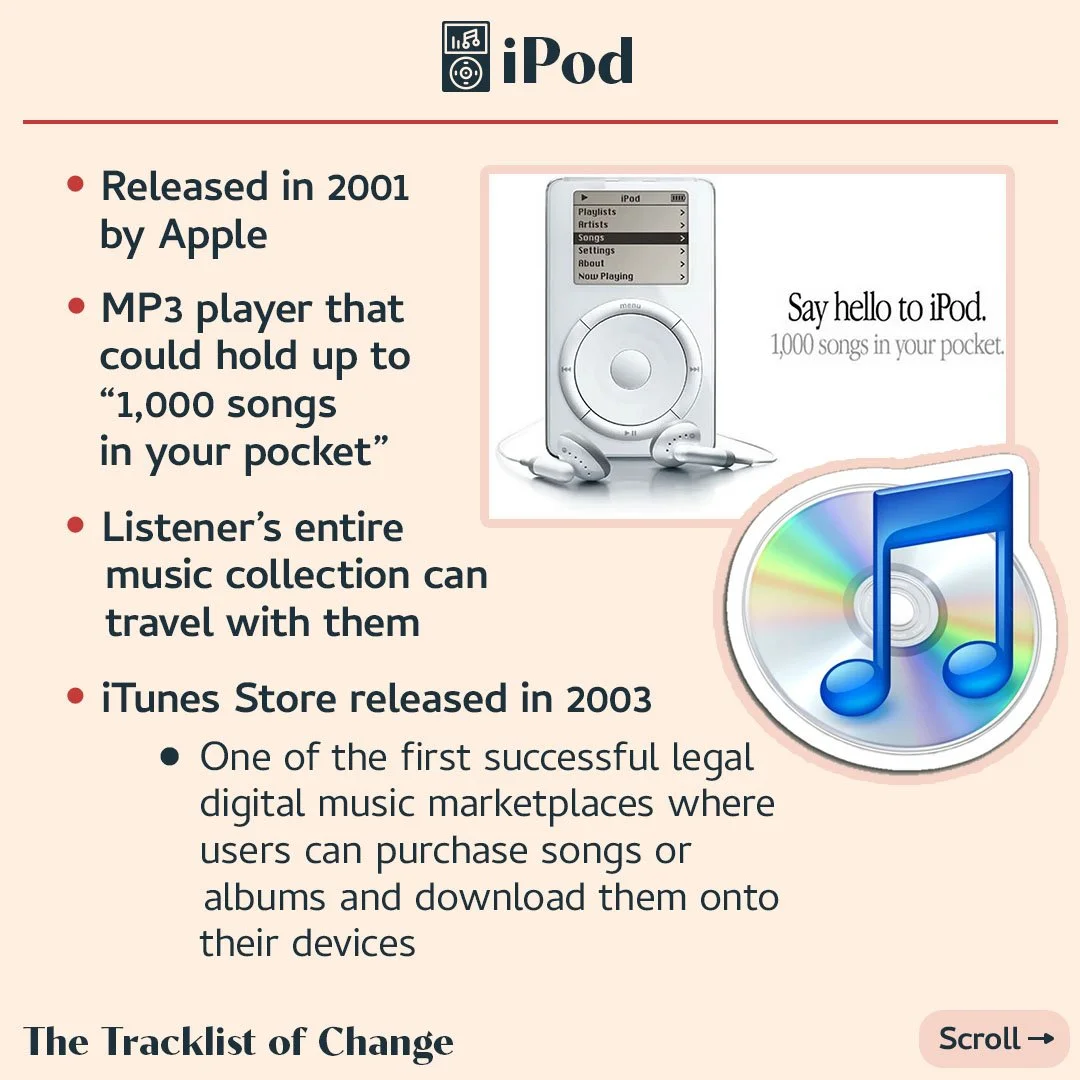
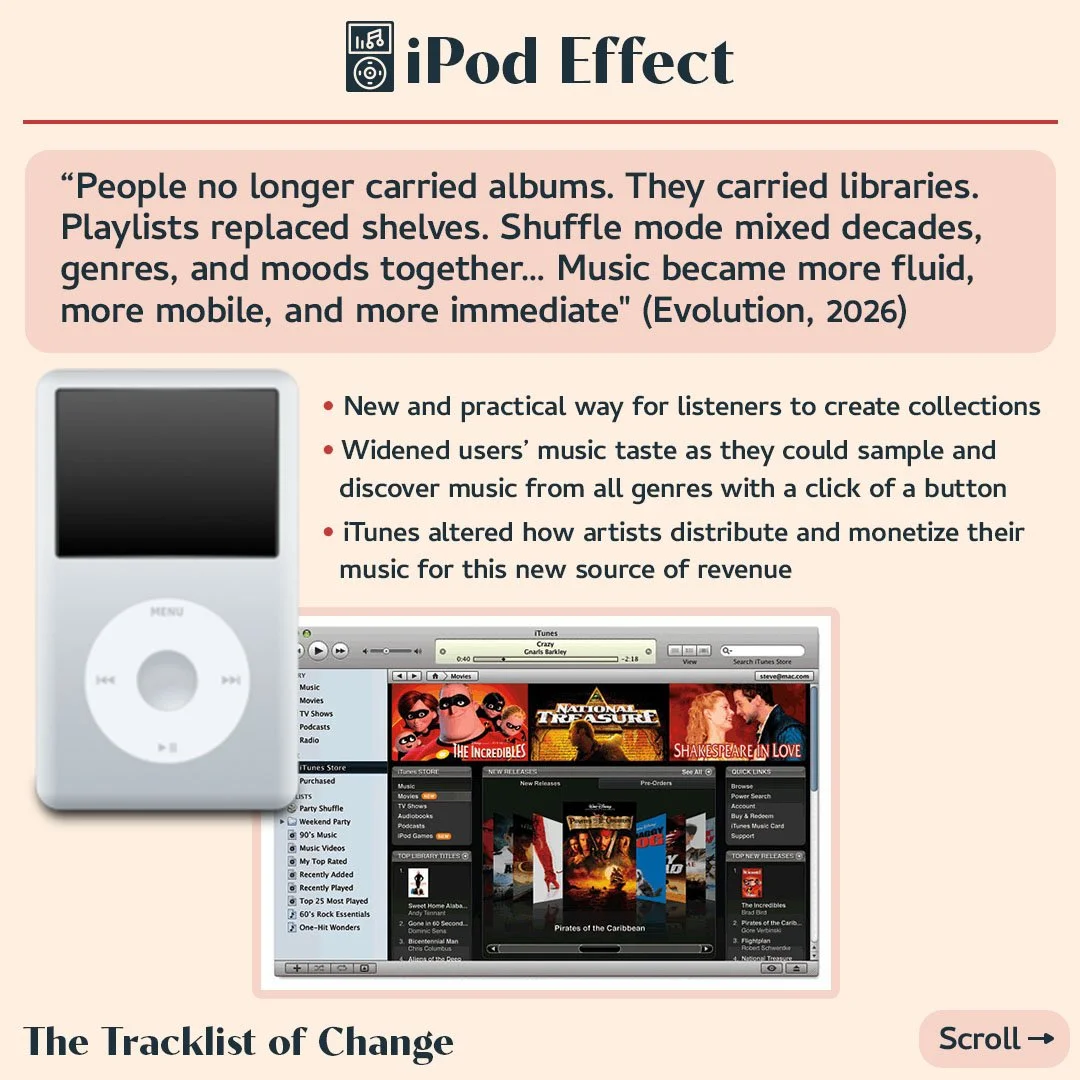
In 1995, all a listener needed was an internet connection and an MP3 player to download and play any song they wanted.
In the Personalized Listening Era of the Tracklist of Change project, we discussed how listeners took a major step toward feeling more control over their music listening with on-the-go devices and recordable tapes.
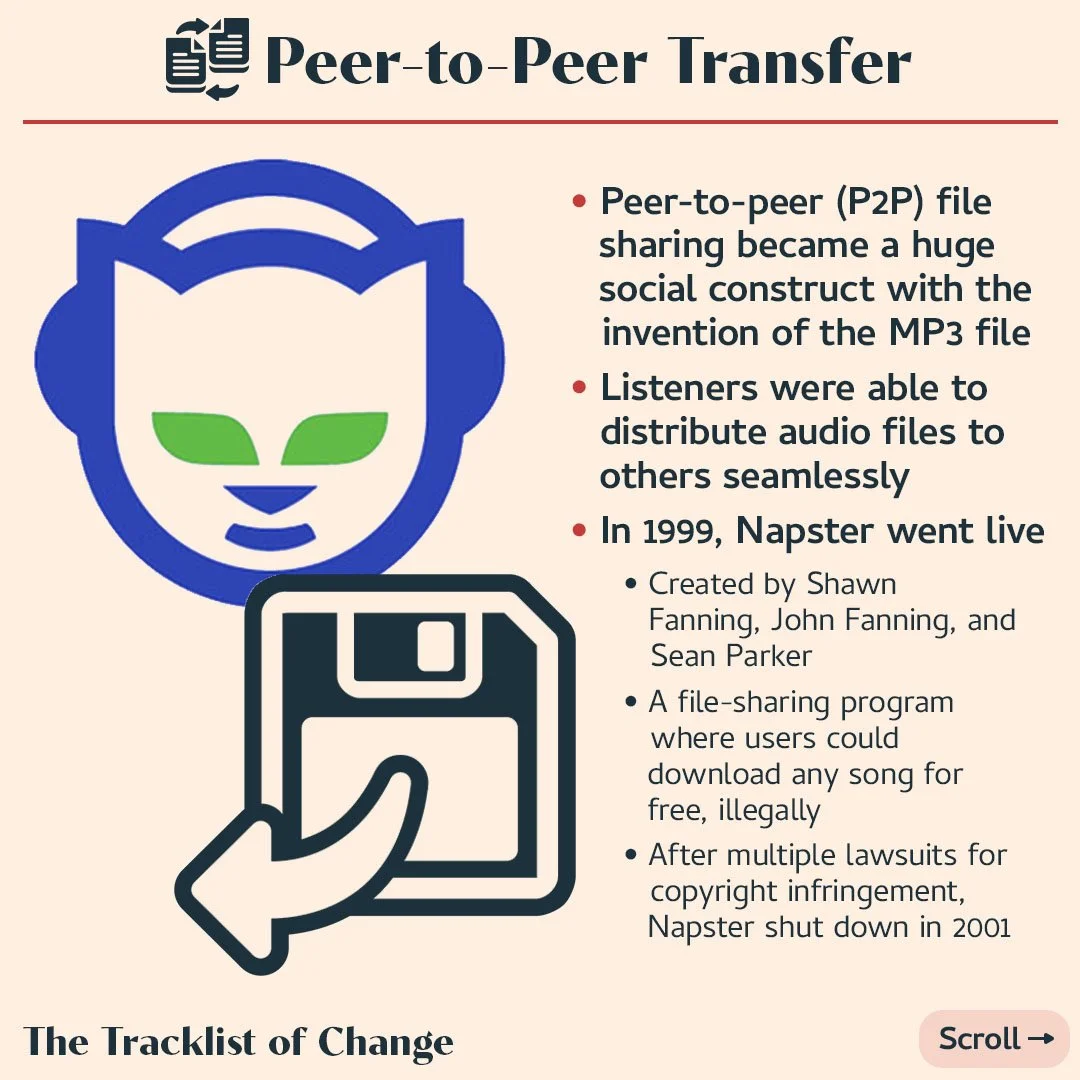
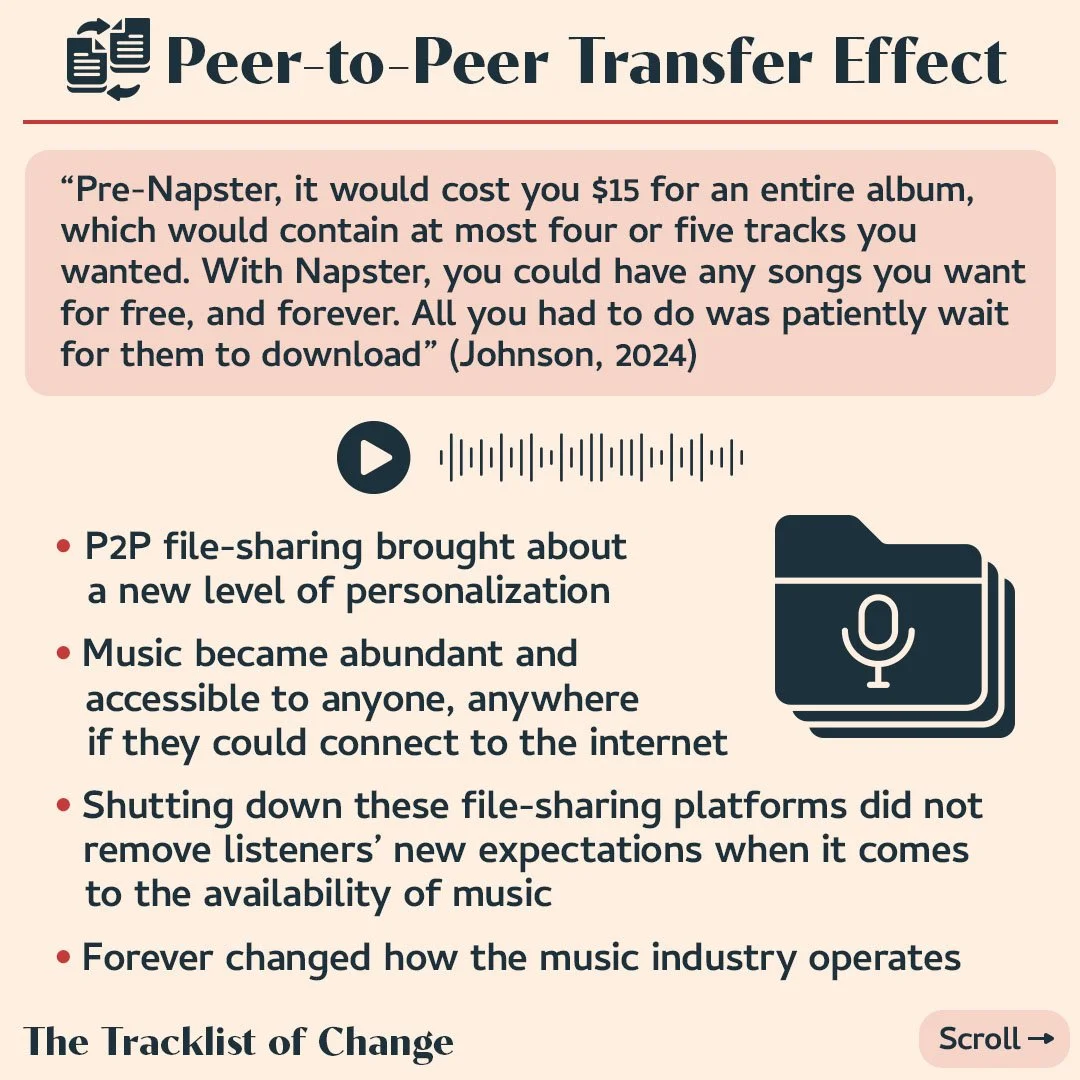
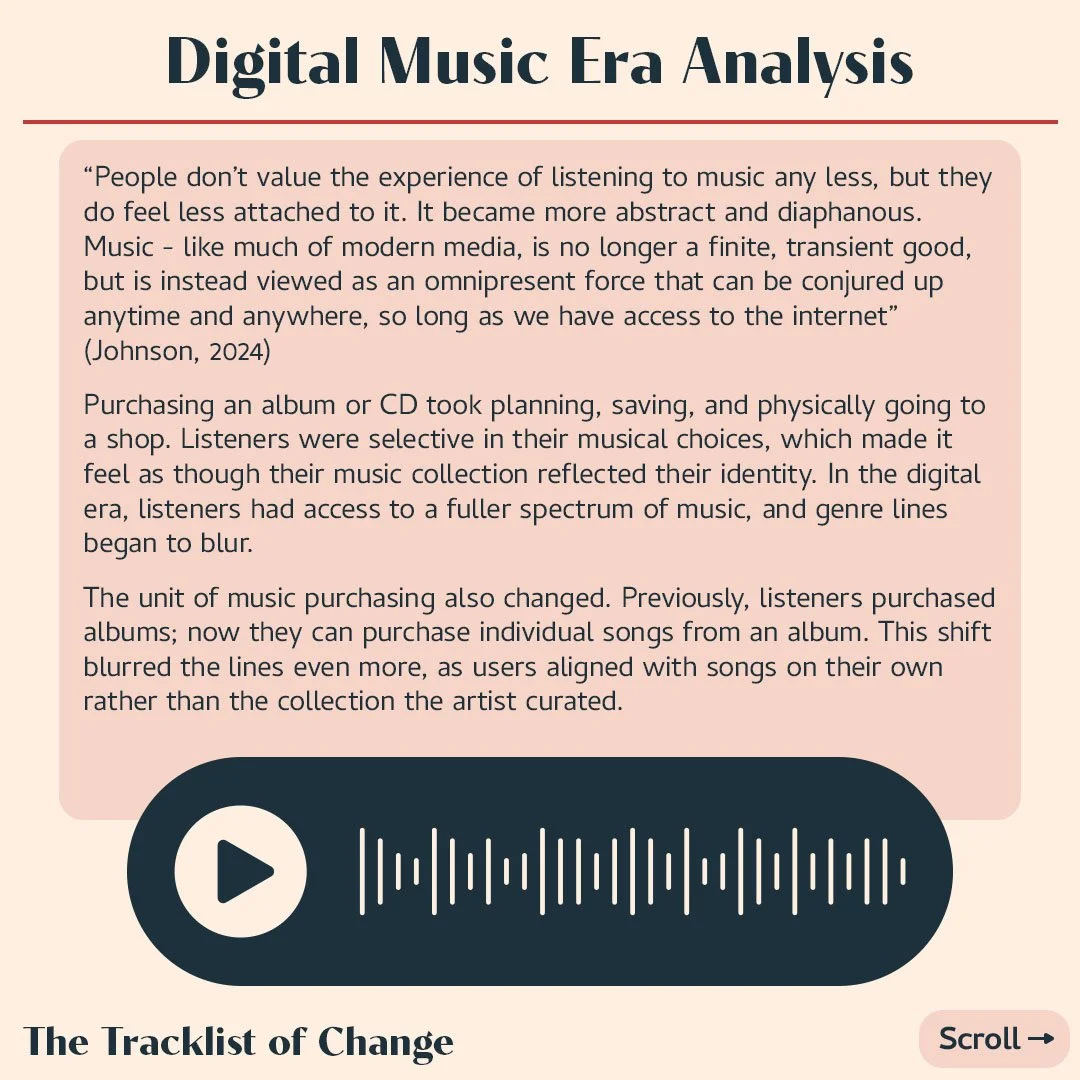
The Digital Music Era is the next step in music accessibility. The need for individual CDs and records was gone. Physical format collections took up space, which could leave less room to acquire more. Digital formats allowed users to download and distribute music easily, but not always legally.
#music #musicconsumption #musicevolution
[Reference list from last slide]
streaming era carousel image post
CAPTION:
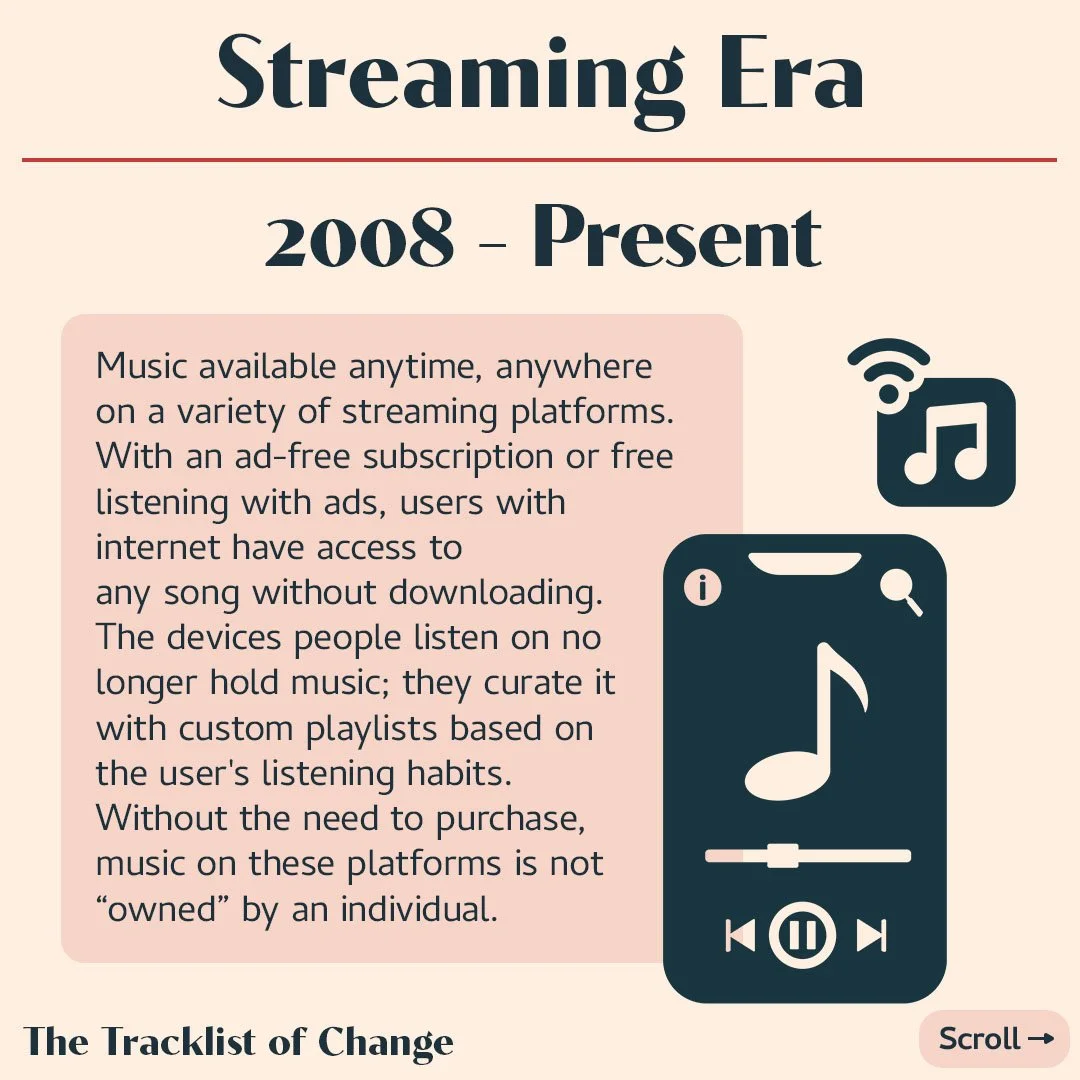
Any song, anytime, with just a click of a button.
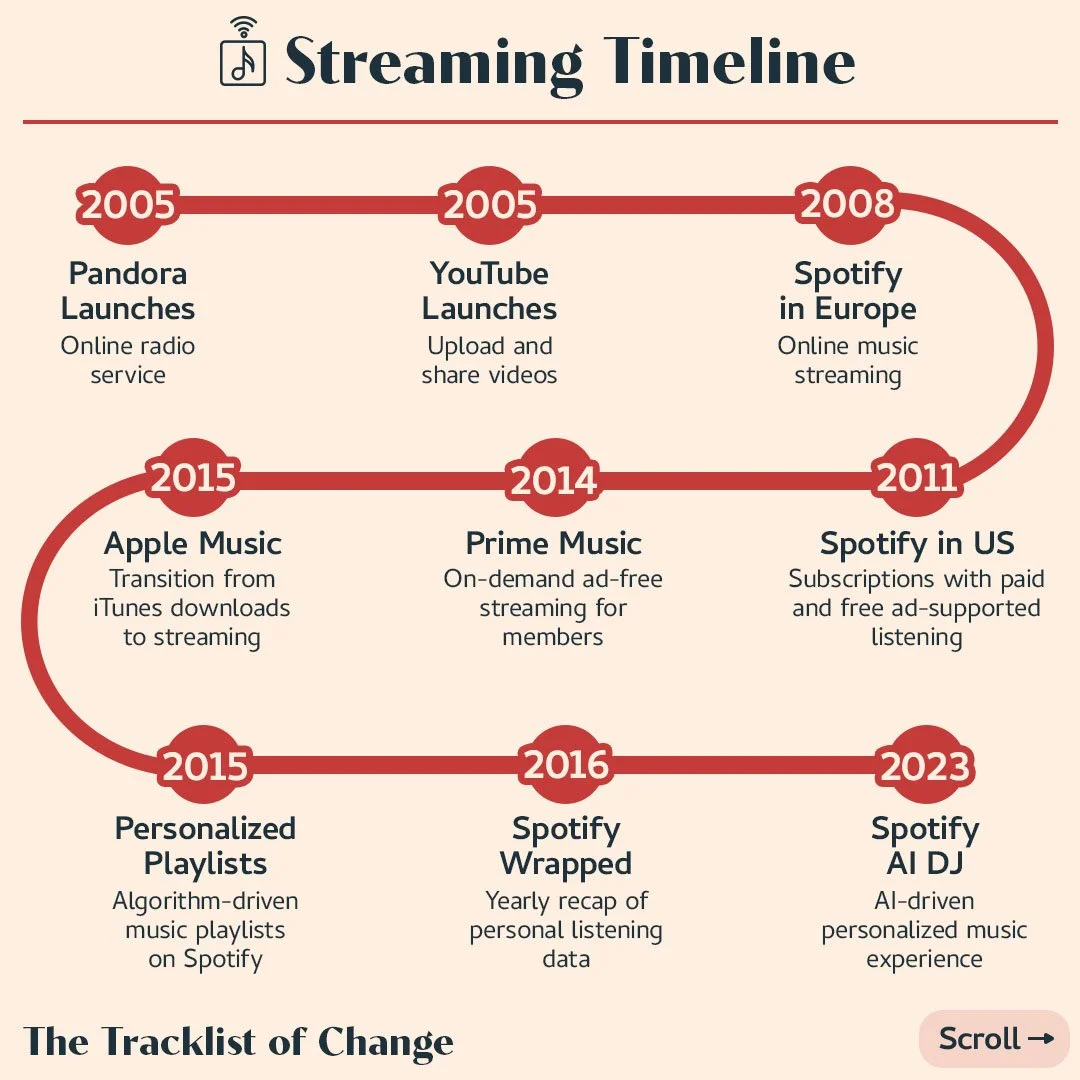
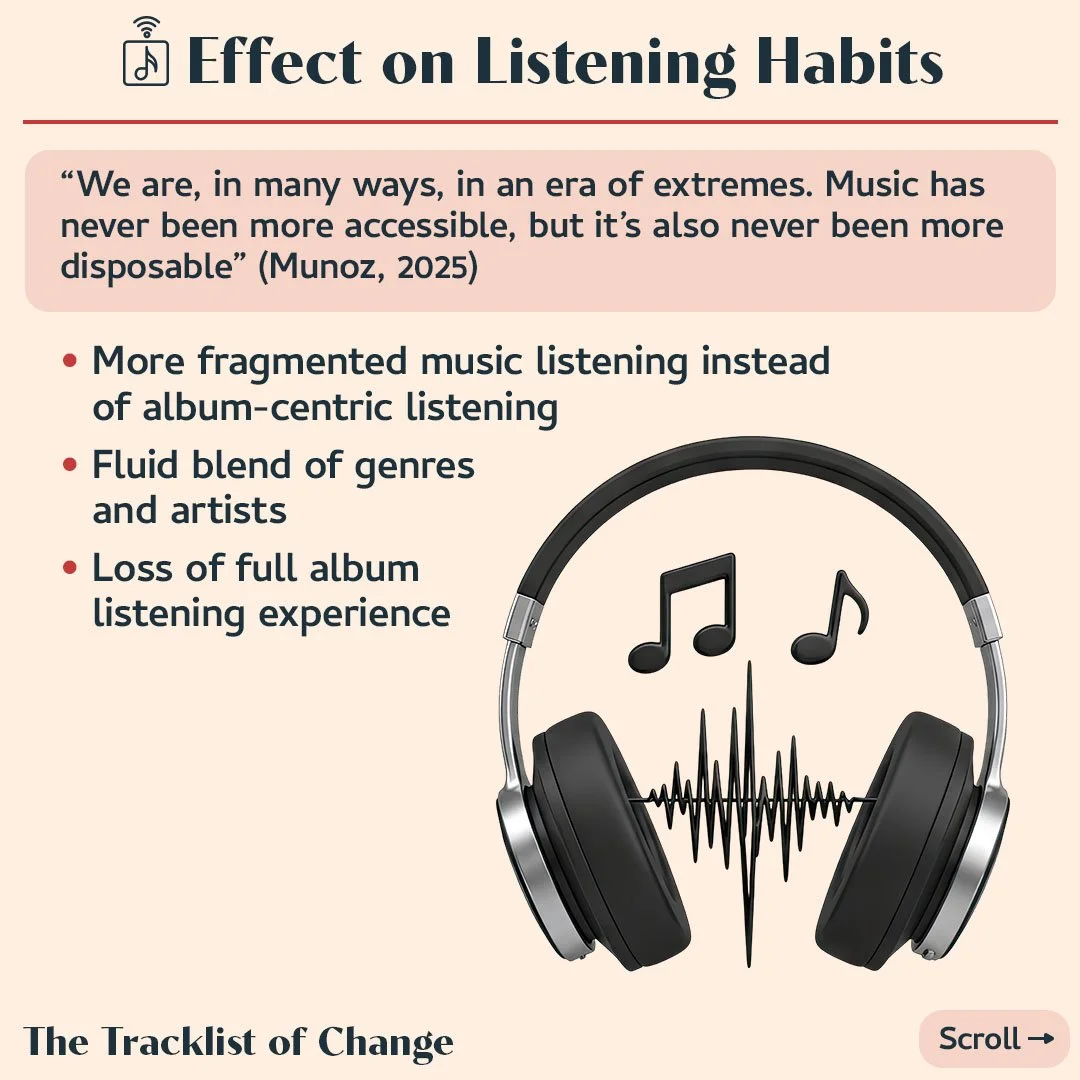
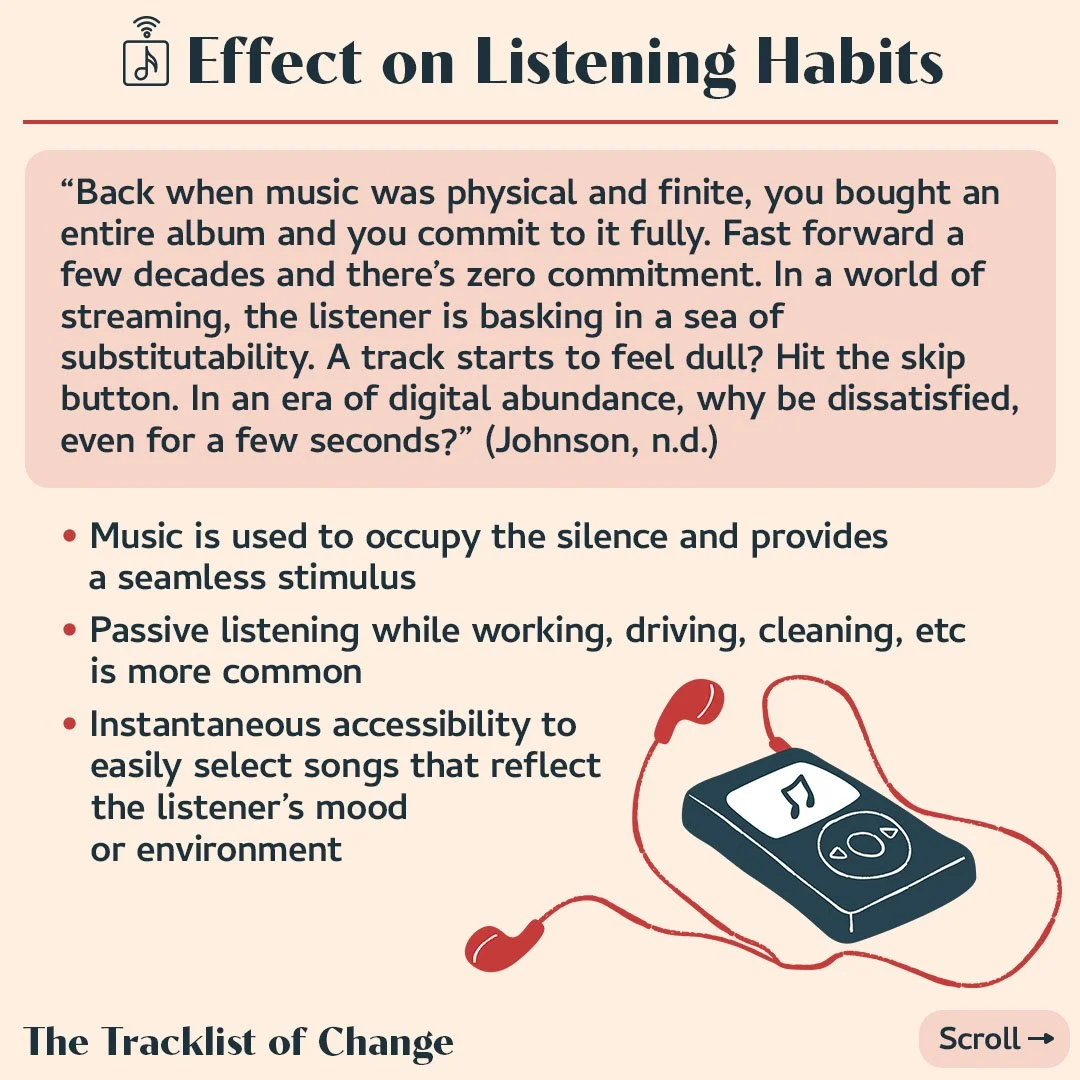
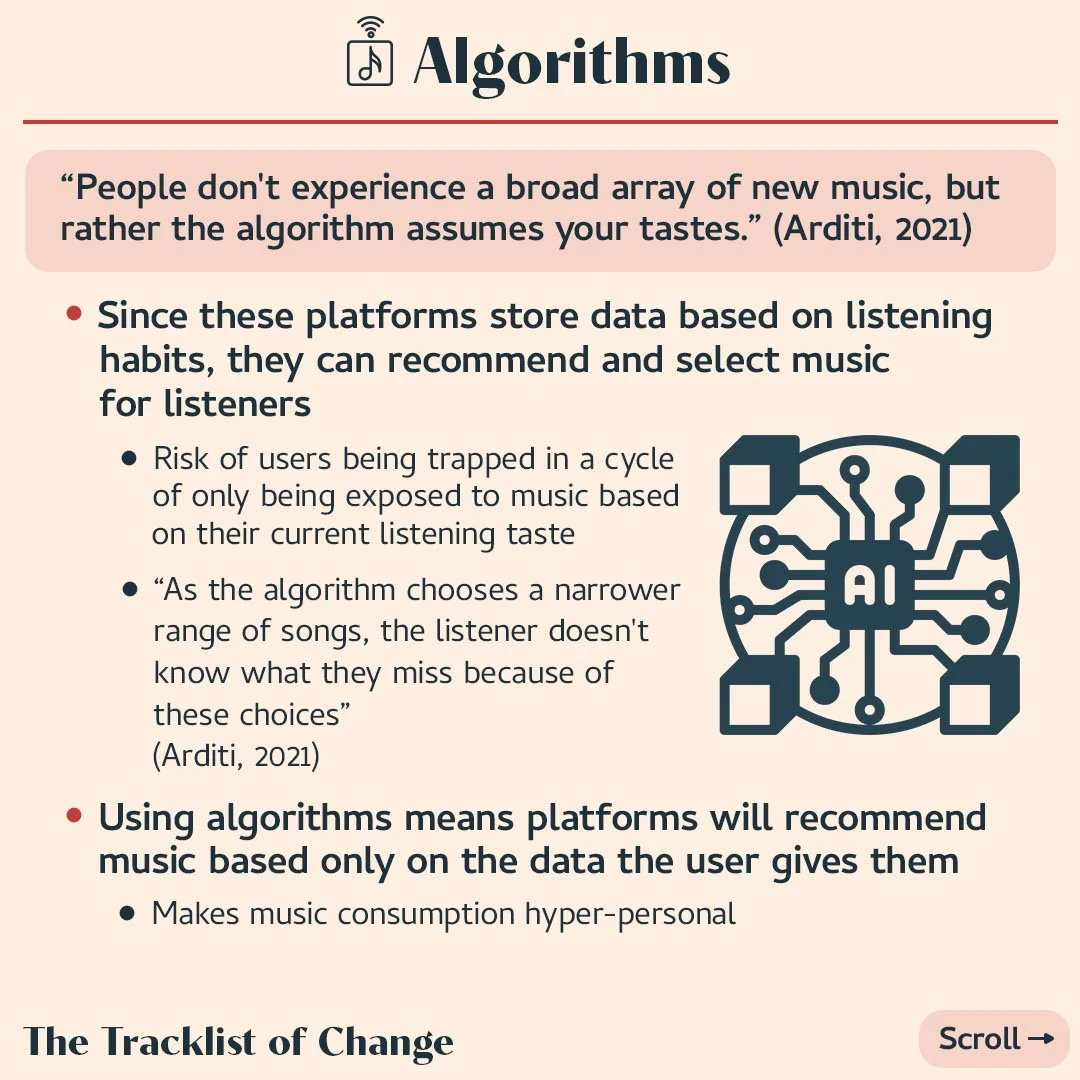
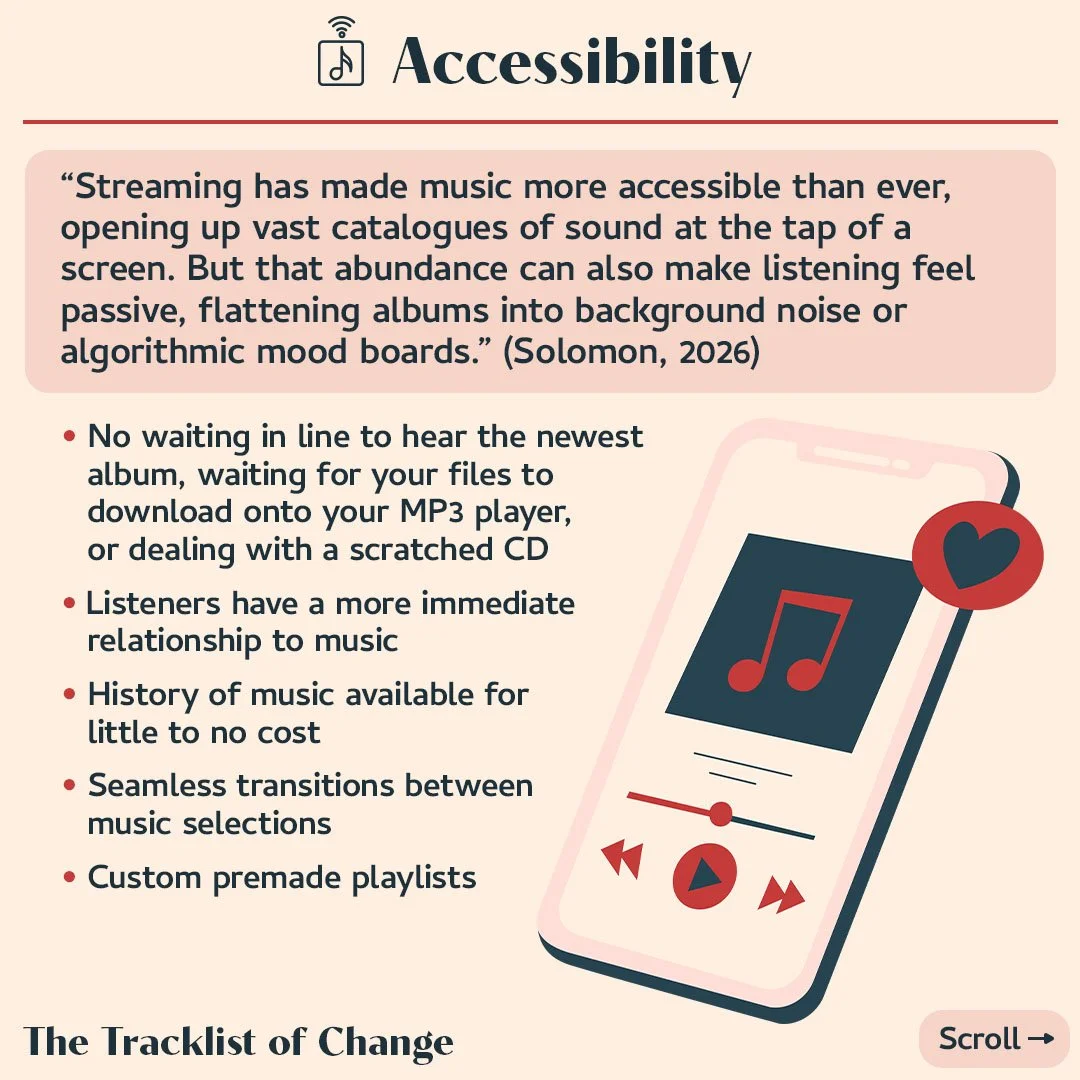
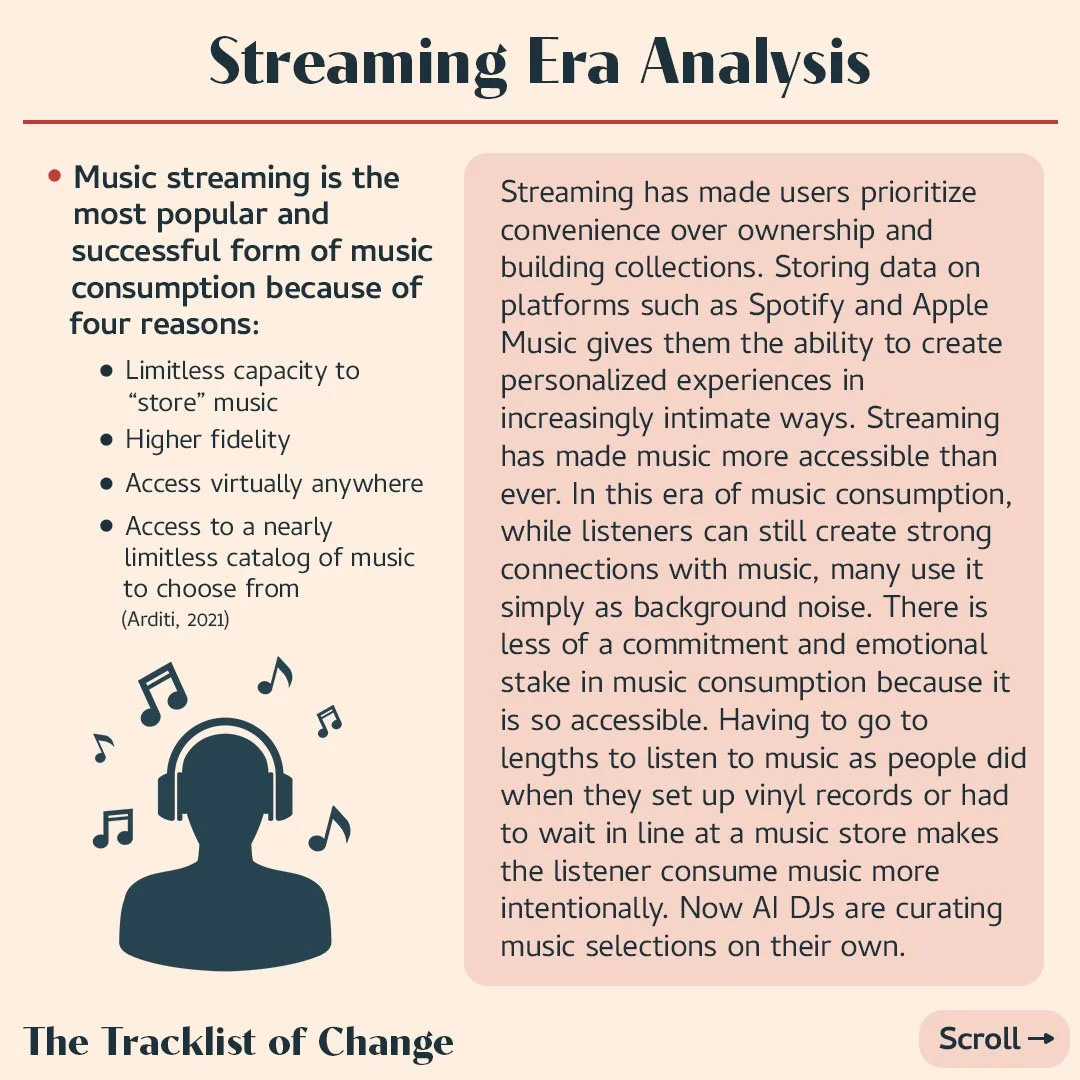
The final era of the Tracklist of Change project is the Streaming Era. Music is more accessible than ever. Music is more accessible than ever. Streaming platforms make music available anytime, anywhere, for little to no cost. Flat subscription rates give listeners access to a vast music collection without having to download or purchase songs. Users can skip, repeat, and discover with ease.
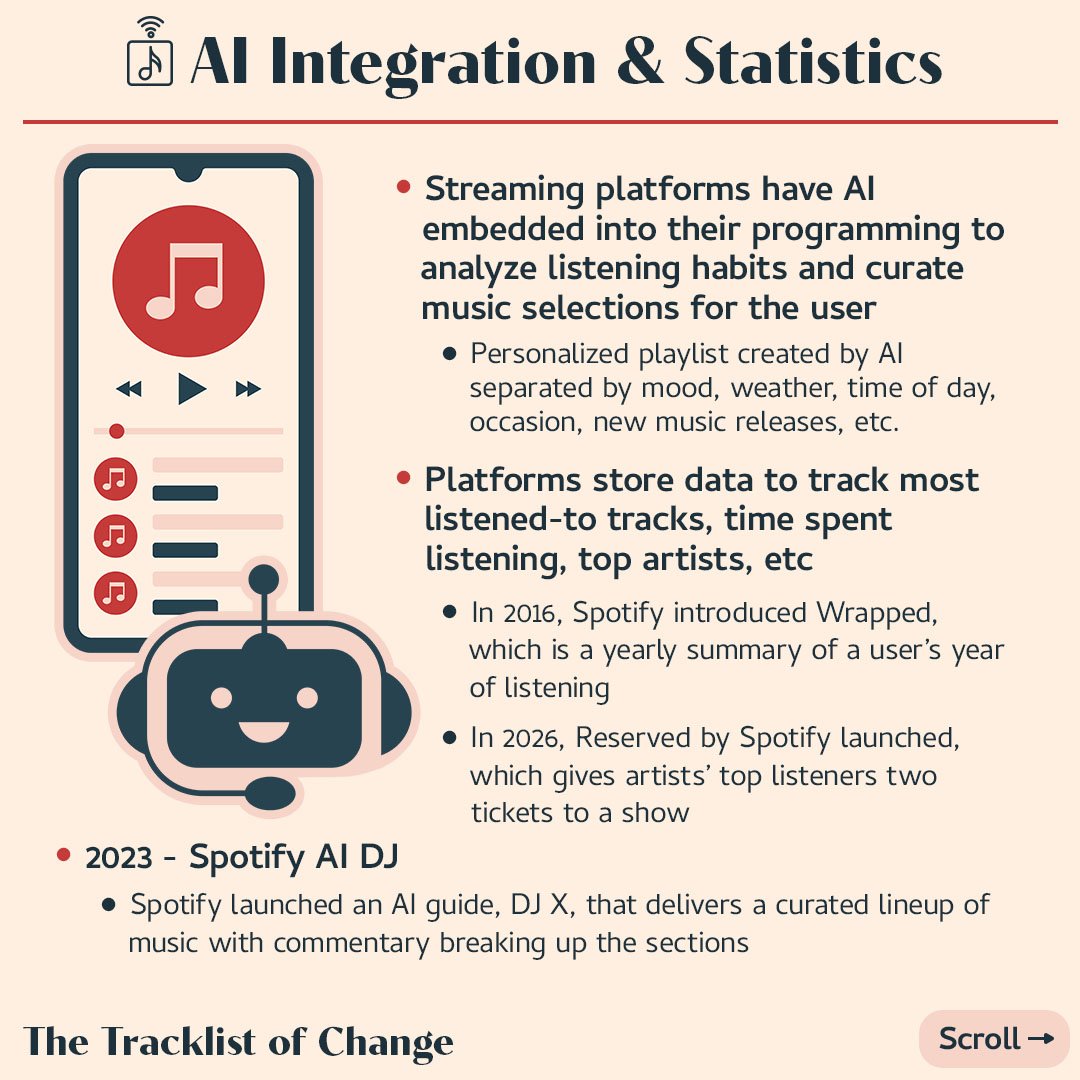
AI DJs drive today’s music consumption with algorithm-inspired custom playlists. Listening to music is now becoming increasingly passive. With tracks and albums from every era available whenever, the relationship between music consumption and consumers has shifted into a new dynamic.
#music #musicconsumption #musicevolution
[Reference list from last slide]


The final step in my process is posting the content I created to my LinkedIn account 3 times a week for 2 weeks. Be sure to head over to my account to check out the published series!